Best Automatic Cat Feeders for Cats with IBD and Digestive Sensitivities (2026 Guide)
Best Automatic Cat Feeders for Cats with IBD and Digestive Sensitivities (2026 Guide)
Introduction
Inflammatory Bowel Disease (IBD) and digestive sensitivities affect a significant number of cats, causing chronic vomiting, diarrhea, weight loss, and nutrient malabsorption. Feeding a cat with IBD is a delicate balancing act — they need small, frequent, precisely portioned meals, specific bowl materials, a stress-free eating environment, and easy-to-clean equipment to prevent bacterial contamination.
The right automatic feeder can transform daily management of an IBD cat. Instead of waking up at 4 AM for a small meal, you can schedule 5–6 precisely measured meals throughout the day and night. Instead of worrying about bacterial build-up in scratched plastic bowls, you can use stainless steel feeders that stay hygienic between cleanings.
This guide covers automatic feeders that meet the specific needs of cats with IBD and digestive sensitivities, including small meal frequency programming, novel protein diet compatibility, stainless steel hygiene, easy-clean designs, and quiet operation for stress-sensitive cats.
Why Feeder Choice Matters for IBD Cats
Small, frequent meals reduce digestive load. IBD cats often cannot tolerate large meals. A full stomach triggers inflammation and vomiting. Feeding 5–6 small meals per day spreads the digestive workload and reduces symptoms. An automatic feeder with flexible small-portion scheduling is essential.
Bowl material directly affects gut health. Plastic bowls develop micro-scratches that harbor bacteria. In an IBD cat with a compromised immune system, bacterial ingestion can trigger flare-ups. Stainless steel and ceramic are the only safe choices.
Stress reduction improves outcomes. Stress is a known trigger for IBD flares. Loud, unpredictable feeders can create anxiety around meal times. A quiet, consistent feeder helps maintain the calm environment IBD cats need.
Novel protein diet compatibility. Many IBD cats eat novel or hydrolyzed protein diets. These may have different textures than standard kibble. The feeder must handle unusual kibble shapes and sizes without jamming.
Top Feeders for IBD and Digestive Sensitivity
1. PETLIBRO Polar – Best Overall for IBD Management
| Feature | Detail |
|---|---|
| Price | ~$80 |
| Meals per Day | Up to 10 (via app scheduling) |
| Bowl Material | Stainless steel |
| Wet Food Support | Active cooling + ice pack (up to 24 hours) |
| Noise Level | ~35 dB |
| Portion Control | ±5% accuracy |
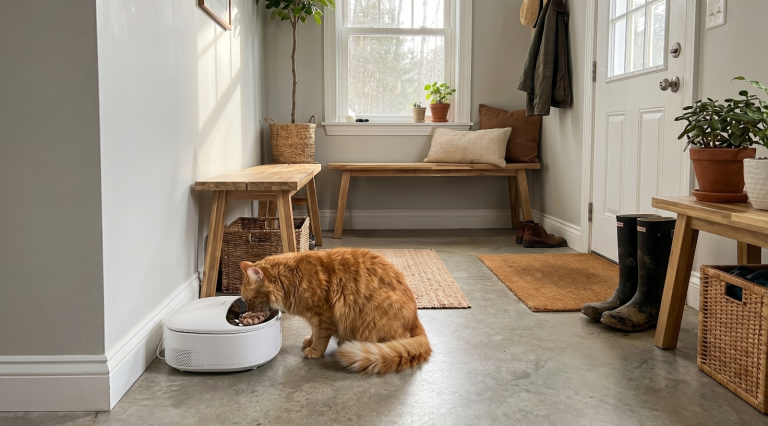
The PETLIBRO Polar is the strongest candidate for IBD management. Its ability to schedule up to 10 small meals per day through the app matches the feeding protocol most veterinarians recommend for IBD cats.
Why it works for IBD: The app lets you program 5–6 small meals at precise times — including early morning and late night feedings that would otherwise disrupt your sleep. The stainless steel bowl eliminates bacterial micro-scratches that could trigger digestive flares. The quiet fan operation (35 dB) minimizes stress.
IBD-specific advantages: Portion accuracy within ±5% ensures your cat gets exactly the prescribed amount of novel protein or hydrolyzed diet. The active cooling system keeps wet food fresh for up to 24 hours — critical if your IBD cat is on a wet-food-only or partially wet diet.
Trade-off: The wet food bowl holds only one meal. You must refresh it daily. The feeder requires WiFi for app-based scheduling.
2. Cat Mate C5000 – Best Mechanical Option for Portion Precision
| Feature | Detail |
|---|---|
| Price | ~$55 |
| Meals per Day | Up to 5 (pre-loaded compartments) |
| Bowl Material | Plastic (compartments) |
| Wet Food Support | Ice pack compatible |
| Noise Level | ~30 dB (mechanical rotation) |
| Portion Control | Exact (manual loading) |
The Cat Mate C5000 offers the most precise portion control available — you decide exactly how much food goes into each compartment. For IBD cats that need exact gram-level measurements, this is invaluable.
Why it works for IBD: Pre-load each of the five compartments with a precise portion of your cat’s prescription diet. Add ice packs underneath for wet food. The mechanical timer is completely silent and reliable. No electronics means nothing to fail.
IBD-specific advantages: Zero portion variance — what you load is what the cat gets. Ideal for cats on strict caloric or gram-based feeding plans. The compartments can be labeled for different food types (morning: hydrolyzed protein, evening: novel protein, etc.).
Trade-off: Plastic compartments are not ideal for IBD cats. Replace the tray every 6 months or line compartments with food-grade silicone. Only 5 meals max per day — some IBD feeding protocols require more.
3. Catit Pixi – Best for Ceramic Bowl and App Scheduling
| Feature | Detail |
|---|---|
| Price | ~$100 |
| Meals per Day | Up to 6 |
| Bowl Material | Ceramic |
| Wet Food Support | Limited (no cooling) |
| Noise Level | ~38 dB |
| Portion Control | Good (pre-loaded compartments) |
The Catit Pixi gets points for its ceramic bowl — non-porous and hygienic, perfect for IBD cats. The rotating compartment system works well for pre-portioned meals.
Why it works for IBD: The ceramic bowl is the second-best material after stainless steel for digestive health. The app allows scheduling up to 6 meals per day. The manual feed button is useful if you need to offer an extra small portion outside the regular schedule.
IBD-specific advantages: Ceramic won’t harbor bacteria the way plastic does. The rotating mechanism delivers each compartment fresh — no food sits in the dispensing chute. The app tracks feeding history, useful for monitoring changes in appetite during IBD flares.
Trade-off: Without cooling, wet food spoils within 2–4 hours. Primarily a dry food feeder. Six meals per day may not be enough for some IBD protocols.
4. PETKIT Fresh Element – Best for Frequent Meal Scheduling
| Feature | Detail |
|---|---|
| Price | ~$100 |
| Meals per Day | Up to 10 (app) |
| Bowl Material | Stainless steel |
| Wet Food Support | No |
| Noise Level | ~40 dB |
| Portion Control | Good (1–10 portions per meal) |
The PETKIT Fresh Element offers up to 10 meals per day through its app, matching the Polar for scheduling flexibility. The stainless steel bowl is IBD-safe.
Why it works for IBD: Ten meal slots per day give you maximum flexibility for ultra-small, frequent feeding. The stainless steel bowl is scratch-resistant and hygienic. The app notifications let you know when your cat has been fed — useful for tracking appetite during IBD symptom monitoring.
IBD-specific advantages: The Fresh Element’s dispensing mechanism handles unusual kibble sizes well, including larger hydrolyzed protein kibble that can jam other feeders. Portion sizes can be adjusted in 1-gram-equivalent increments through the app.
Trade-off: Dry food only. No wet food capability at all, which is a limitation if your IBD cat needs a wet-food-based diet.
Meal Frequency Guide for IBD Cats
| Life Stage | Recommended Meals/Day | Ideal Meal Spacing | Feeder Recommendation |
|---|---|---|---|
| Mild IBD | 4–5 meals | Every 4–5 hours | Cat Mate C5000, Catit Pixi |
| Moderate IBD | 5–6 meals | Every 3–4 hours | PETLIBRO Polar, PETKIT Fresh Element |
| Severe IBD / Flare Recovery | 6–10 meals | Every 2–3 hours | PETLIBRO Polar (up to 10 meals) |
| Wet food only | 5–6 meals | Every 3–4 hours | PETLIBRO Polar (active cooling) |
Bowl Material Safety for IBD Cats
| Material | Bacteria Growth Risk | Scratch Resistance | Cleanliness | IBD Suitability |
|---|---|---|---|---|
| Stainless Steel | Very low | High | ⭐⭐⭐⭐⭐ | ✅ Best choice |
| Ceramic (glazed, chip-free) | Low | Medium | ⭐⭐⭐⭐ | ✅ Good choice |
| Ceramic (chipped or cracked) | High | Low | ⭐⭐ | ❌ Replace immediately |
| Plastic | High | Low | ⭐⭐ | ❌ Avoid for IBD |
IBD cats have compromised gut immunity. Bacterial contamination from scratched plastic bowls can directly trigger flares. Stainless steel is the only material that guarantees zero bacterial harboring. Ceramic is acceptable if you inspect it regularly for chips and cracks.
Stress Reduction Features
Stress triggers IBD flares. The feeder itself should contribute to a calm feeding environment:
Quiet operation. Feeders over 45 dB can startle sensitive cats. All feeders recommended here operate at or below 40 dB.
Consistent schedule. IBD cats thrive on routine. App-based feeders (PETLIBRO Polar, PETKIT Fresh Element, Catit Pixi) maintain the same schedule every day, including weekends and holidays.
Predictable dispensing. Sudden, loud dispense events can create food anxiety. The Cat Mate C5000’s gentle rotation is the least startling. The Polar’s auger mechanism is consistent and predictable.
Recommended Feeding Setup for IBD Cats
-
Choose stainless steel as your primary bowl material. PETLIBRO Polar or PETKIT Fresh Element are top choices.
-
Schedule 5–6 small meals per day. Use the app to spread meals evenly across 24 hours. Include an early morning meal (IBD cats often wake hungry) and a late-night meal to prevent overnight stomach acid build-up.
-
If feeding wet food, use active cooling. The PETLIBRO Polar’s semiconductor cooling keeps wet food at safe temperatures for 24 hours, preventing bacterial growth that could trigger a flare.
-
Clean the bowl daily. Rinse the stainless steel bowl with hot water and mild soap every day. Run through the dishwasher weekly.
-
Monitor appetite through feeding data. App-based feeders track how much your cat eats. Sudden appetite changes often precede IBD flares by 24–48 hours.
Final Verdict
| Situation | Recommended Feeder | Why |
|---|---|---|
| Best overall for IBD management | PETLIBRO Polar | Up to 10 meals, stainless steel, active cooling for wet food, quiet operation |
| Best for strict portion control | Cat Mate C5000 | Exact manual portioning, mechanical reliability, silent operation |
| Best for ceramic bowl preference | Catit Pixi | Non-porous ceramic, good app, gentle rotation |
| Best for maximum meal frequency | PETKIT Fresh Element | Up to 10 meals, stainless steel, handles unusual kibble sizes |
FAQ
How many meals per day does an IBD cat need?
Most veterinarians recommend 4–6 small meals per day. Severe cases may need up to 8–10. Work with your vet to determine the optimal frequency for your cat.
Can I use an automatic feeder for hydrolyzed protein kibble?
Yes, but check the kibble size. Some hydrolyzed diets have larger or irregularly shaped kibble that may jam certain dispensers. The PETLIBRO Polar and PETKIT Fresh Element handle a wide range of kibble sizes.
Is wet food or dry food better for IBD cats?
It depends on the individual cat and the specific protein source needed. Some IBD cats tolerate wet food better; others need the consistent composition of a dry prescription diet. Your veterinarian should guide this decision.
How often should I clean the feeder for an IBD cat?
Daily bowl cleaning is essential. The full feeder should be disassembled and deep-cleaned weekly. Stainless steel components can be dishwasher-sanitized.
Can stress from a noisy feeder cause an IBD flare?
Yes. Stress is a known IBD trigger. Choose a feeder with quiet operation (under 40 dB) and a consistent, predictable feeding schedule to minimize stress.