Best Automatic Cat Feeders for Cats with Dental Problems and Soft Food Diets in 2026
Best Automatic Cat Feeders for Cats with Dental Problems and Soft Food Diets in 2026
Introduction
Dental disease affects 50–90% of cats over the age of four. Whether your cat has gingivitis, tooth resorption, stomatitis, or has recently had dental extractions, feeding becomes a daily challenge. Dry kibble is painful to chew. Even semi-moist food can aggravate sensitive gums.
Choosing the right automatic feeder for a cat with dental problems goes beyond convenience — it’s about ensuring your cat can eat comfortably, get proper nutrition, and maintain a stress-free feeding routine.
This guide covers feeders that work well with soft food, pâté, minced wet food, small kibble for post-treatment recovery, and prescription dental diets. We’ll also cover bowl material safety (stainless steel and ceramic for gum health), gentle dispensing mechanisms, and frequent small meal programming — all critical for cats with oral health issues.
What to Look for in a Feeder for Cats with Dental Problems
Not every automatic feeder is suitable for a cat with dental issues. Here are the specific features that matter:
Soft food compatibility. Many cats with dental problems need wet food, pâté, or minced diets. Look for feeders with wet food capability — ice pack compartments, wide bowls, and dispensing mechanisms that don’t jam on soft textures.
Stainless steel or ceramic bowls. Plastic bowls develop micro-scratches that harbor bacteria, which can worsen gum infections. Stainless steel is non-porous and hygienic. Ceramic is also safe but must be glazed and chip-free.
Frequent small meal programming. Dental patients often need 4–6 small meals per day rather than 1–2 large ones. Smaller portions reduce the time food sits in the bowl and minimize bacterial growth that could irritate sensitive mouths.
Gentle dispensing mechanism. Cats with sore mouths may be startled by loud mechanisms. Quieter dispensers (under 40 dB) reduce stress during feeding time.
Easy to clean. Wet food residue requires daily cleaning. Removable, dishwasher-safe bowls and trays are essential for hygiene.
Top Feeders for Dental Health Feeding
1. PETLIBRO Polar – Best Overall for Soft Food Feeding
| Feature | Detail |
|---|---|
| Price | ~$80 |
| Capacity | 5 L dry hopper + wet food bowl with ice pack |
| Meals | Up to 10 per day |
| Bowl Material | Stainless steel (wet food bowl) |
| App Control | Yes (WiFi) |
| Noise Level | ~35 dB (fan) |
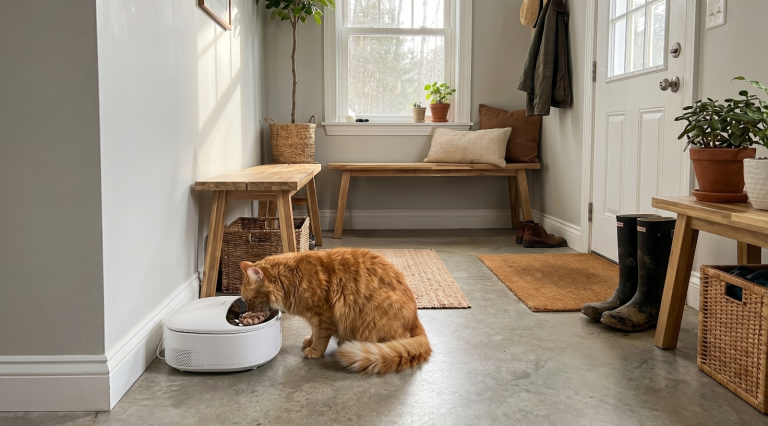
The PETLIBRO Polar is the top choice for cats with dental problems because it handles soft food exceptionally well. The stainless steel wet food bowl is scratch-resistant and hygienic — no bacteria-harboring crevices to irritate sensitive gums.
Why it works for dental cats: You can load pâté or minced wet food into the dedicated wet food bowl. The active cooling keeps food fresh for up to 24 hours, so you can pre-load multiple small meals in advance. The app lets you schedule up to 10 small portions per day, ideal for the frequent-small-meal approach many veterinarians recommend for dental patients.
Dental-specific advantages: The stainless steel bowl minimizes bacterial growth compared to plastic. The quiet fan (35 dB) won’t startle a sensitive cat. The ice pack compartment keeps wet food at safe temperatures, reducing the risk of spoilage that could worsen oral inflammation.
Trade-off: The wet food bowl holds only one meal. You’ll need to refresh it daily. The dry hopper is a second food source — useful if your vet approves a mix of soft food and small, easy-to-chew kibble.
2. Cat Mate C5000 – Best Mechanical Option for Multiple Soft Food Meals
| Feature | Detail |
|---|---|
| Price | ~$55 |
| Capacity | 5 compartments (up to 2.5 cups each) |
| Meals | Up to 5 pre-loaded meals |
| Bowl Material | Plastic (compartments) |
| App Control | No (timer-based) |
| Noise Level | ~30 dB (mechanical rotation only) |
The Cat Mate C5000 is an excellent choice for cats that need multiple small wet food meals throughout the day. The rotating tray holds five individual compartments — each can be filled with a different food type or portion size.
Why it works for dental cats: Pre-portion soft food into all five compartments. Add ice packs under the tray to keep food fresh. Set the timer to open one compartment every 4, 6, or 12 hours. Your cat gets fresh soft food at each scheduled meal without you being home.
Dental-specific advantages: The mechanical design is nearly silent — no motors, no augers, just a gentle rotation. The quiet operation won’t distress a cat with mouth pain. Each compartment lets you control exact portion sizes, important if your cat is on a prescription dental diet.
Trade-off: The compartments are plastic, which is not ideal for long-term hygiene. Consider replacing the tray annually or using food-grade silicone liners. No app means you can’t adjust schedules remotely.
3. Catit Pixi – Best for Prescription Dental Diets
| Feature | Detail |
|---|---|
| Price | ~$100 |
| Capacity | Rotating compartment system |
| Meals | Up to 6 portions |
| Bowl Material | Ceramic |
| App Control | Yes (WiFi + manual button) |
| Noise Level | ~38 dB |
The Catit Pixi works well for cats on prescription dental diets, especially if your vet has recommended softened kibble or semi-moist dental food.
Why it works for dental cats: The ceramic bowl is non-porous and hygienic — an excellent choice for cats with gum inflammation or stomatitis. The app lets you schedule multiple small meals, and the manual feed button is useful for offering small “comfort portions” throughout the day.
Dental-specific advantages: Ceramic is the most hygienic bowl material when kept chip-free. The rotating mechanism is gentle and relatively quiet. The Pixi also offers an Alexa skill for voice-controlled feeding, useful if handling the feeder is difficult.
Trade-off: No cooling means soft wet food will spoil within 2–4 hours. Best for dry or semi-moist prescription food, or wet food that’s eaten immediately.
4. PetSafe Healthy Pet Gravity Feeder – Best Budget Option for Dry Food
| Feature | Detail |
|---|---|
| Price | ~$30 |
| Capacity | 5 lb dry food |
| Meals | Continuous gravity feed |
| Bowl Material | Stainless steel |
| App Control | No |
| Noise Level | Silent (no mechanism) |
A gravity feeder is the simplest option for cats that need easy access to small, frequent meals of softened kibble or dental diet dry food.
Why it works for dental cats: The stainless steel bowl is hygienic. Gravity feeders have no moving parts, so there’s zero noise. If your cat’s dental issue is mild and they can handle softened small kibble, a gravity feeder offers unrestricted access to food throughout the day.
Dental-specific advantages: Stainless steel bowl (safe for sensitive gums). Silent operation. No dispense mechanism to jam on softened kibble.
Trade-off: No portion control. Not suitable for wet food. Best for cats that self-regulate their food intake and need only dry food access.
Bowl Material Comparison for Dental Health
| Material | Hygiene Rating | Scratch Resistance | Bacteria Risk | Best For |
|---|---|---|---|---|
| Stainless Steel | ⭐⭐⭐⭐⭐ | High | Very low | Wet food, soft food, daily use |
| Ceramic | ⭐⭐⭐⭐ | Medium (can chip) | Low | Dry food, semi-moist food |
| Plastic | ⭐⭐⭐ | Low | High (scratches harbor bacteria) | Temporary use only |
| Glass | ⭐⭐⭐⭐⭐ | Medium | Very low | Dry food (not common in feeders) |
For cats with dental problems: stainless steel is the clear winner. It’s non-porous, won’t scratch, and is the easiest to clean and sanitize. Ceramic is a good alternative if kept chip-free and cleaned regularly.
Meal Frequency: Why Small Meals Matter for Dental Cats
Veterinarians often recommend 4–6 small meals per day for cats with dental disease. Here’s why:
Less time food sits in the bowl. Smaller portions are consumed quickly, reducing the window for bacterial growth. Bacteria build-up on leftover food can aggravate gingivitis and stomatitis.
Reduced pressure on the jaw. Eating a large portion at once requires more chewing and puts pressure on sore teeth and gums. Small meals reduce the effort per feeding session.
Better medication adherence. Many cats with dental issues need oral medications or dental rinses. Smaller, more frequent meals make it easier to incorporate medication into a feeding routine.
Which feeders support small meals?
– PETLIBRO Polar: Up to 10 meals per day through the app. Excellent for small meal scheduling.
– Cat Mate C5000: Up to 5 pre-loaded meals. Good for daily scheduling.
– Catit Pixi: Up to 6 portions. Sufficient for most dental feeding plans.
– Gravity feeder: Continuous access, but zero portion control.
Winner: PETLIBRO Polar offers the most meal slots (10 per day), making it the best match for veterinary-recommended small meal protocols.
Cleaning Protocol for Dental Health Feeders
A clean feeder is non-negotiable for cats with dental problems. Bacteria from a dirty feeder can enter the mouth through inflamed gums and cause systemic issues.
Daily:
– Remove and rinse the bowl in hot water
– Wipe down the dispensing area with a pet-safe disinfectant
– Discard any uneaten wet food
Weekly:
– Wash all removable parts in the dishwasher (top rack) or with hot soapy water
– Disassemble and clean the hopper and auger area (if applicable)
– Inspect the bowl for scratches or chips — replace if damaged
Monthly:
– Deep clean the entire feeder
– Replace plastic components (bowls, trays) if they show wear
– Check and replace ice packs if they leak or lose cooling efficiency
Final Recommendations
| Situation | Recommended Feeder | Why |
|---|---|---|
| Cat needs soft wet food, multiple small meals | PETLIBRO Polar | Stainless steel bowl, up to 10 meals/day, active cooling |
| Cat needs pre-portioned wet meals, no WiFi | Cat Mate C5000 | 5 compartments, ice pack cooling, mechanical reliability |
| Cat eats prescription dental kibble | Catit Pixi | Ceramic bowl, good app, gentle rotation |
| Cat needs simple access to softened kibble | PetSafe Gravity Feeder | Stainless steel bowl, silent operation, lowest cost |
| Cat has severe stomatitis or gum inflammation | PETLIBRO Polar | Stainless steel (no bacteria), frequent small meals, quiet operation |
FAQ
Can I use softened kibble in an automatic feeder?
Yes, but with caution. Softened kibble can clump and jam auger-based dispensers. The Cat Mate C5000 (pre-loaded compartments) or gravity feeder work best for softened kibble.
How often should I clean my cat’s feeder if they have dental disease?
Daily bowl rinsing and weekly full disassembly cleaning. Cats with active oral infections need the highest hygiene standards.
Is wet food always better for dental cats?
Not necessarily. Some prescription dental diets are formulated with kibble texture that helps clean teeth mechanically. Your veterinarian should guide the choice between wet and dry food based on your cat’s specific condition.
Can an automatic feeder help with post-dental-surgery recovery?
Absolutely. The ability to schedule multiple small, soft meals reduces stress on healing mouth tissues and ensures the cat eats regularly without human presence causing additional stress.