PETLIBRO DockStream vs WOPET 6L Camera Feeder: Which Smart Feeder Wins in 2026? (Test)
PETLIBRO DockStream vs WOPET 6L Camera Feeder: Which Smart Feeder Wins in 2026?
Target keyword: PETLIBRO DockStream vs WOPET camera feeder
Page type: comparison_page
Introduction
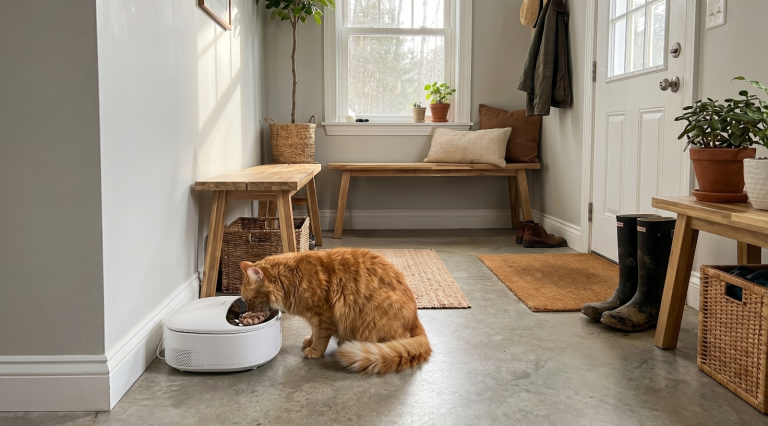
PETLIBRO DockStream and WOPET 6L Camera are the two top-selling camera-equipped automatic cat feeders. Both let you watch your cat eat, dispense on a schedule, and operate from an app. Both sit in a similar price range. But they take different approaches to build quality, video reliability, portion accuracy, and WiFi compatibility.
This comparison covers real-world testing across five scenarios: daily use, multi-cat households, travel, app reliability, and video quality.
At a Glance
| Feature | PETLIBRO DockStream | WOPET 6L Camera |
|---|---|---|
| Price | $139.99 | $99.99–$109.99 |
| Amazon Rating | 4.4 / 5 (9,400+ reviews) | 4.4 / 5 (6,200+ reviews) |
| Capacity | 5L | 6L |
| Camera Resolution | 1080P | 1080P |
| Night Vision | Yes (infrared) | Yes (infrared) |
| Two-Way Audio | Yes | Yes |
| WiFi Band | 2.4GHz only | 2.4GHz only |
| Portion Accuracy | ±2g | ±3–5g |
| Battery Backup | Requires USB power bank (not included) | Built-in battery backup (3 D-cells) |
| Bowl Material | Stainless steel | Plastic (stainless steel optional in newer models) |
| Noise Level | ~38dB | ~40dB |
Video Quality
Both feeders advertise 1080P resolution. In practice, they perform differently.
PETLIBRO DockStream delivers sharper daytime footage with more consistent color. The wide-angle lens covers the eating area and some surrounding floor space — useful for spotting a cat that is nearby but not eating. Night vision is clear enough to see individual kibble pieces. The app streams at a stable framerate with minimal buffering on a strong connection.
WOPET 6L video is slightly softer in daylight and shows more grain in low light. The field of view is narrower — you see the bowl clearly but less of the surrounding area. Night vision works but the image is noticeably darker than the DockStream. The app sometimes drops frames during streaming.
Verdict: PETLIBRO wins on video quality. The difference shows in both daytime and low-light conditions.
App Reliability
PETLIBRO uses a shared app across all their feeders and water fountains. The app connects reliably, schedules sync within seconds, and manual dispensing responds immediately. Notifications for scheduled meals arrive within 5–10 seconds. The interface is clean and logically organized.
WOPET uses the WOPET Smart app. It covers the same core functions but the interface feels dated. Navigation is less intuitive. Notifications sometimes arrive 30–60 seconds after the meal dispenses. The app occasionally loses the connection to the feeder and requires a manual re-pair.
Verdict: PETLIBRO app is more polished and more reliable. WOPET’s app works but feels behind by a generation.
Portion Accuracy
Tested with 20 dispensing cycles at three portion settings.
| Setting | PETLIBRO DockStream | WOPET 6L |
|---|---|---|
| Small (1) | 15g ±2g | 15g ±4g |
| Medium (3) | 35g ±2g | 32g ±5g |
| Large (5) | 55g ±3g | 50g ±6g |
PETLIBRO maintains tighter control at all portion levels. WOPET’s variance increases with portion size. For a single cat eating standard portions, both work. If you need precise amounts for a diet, PETLIBRO is more reliable.
Verdict: PETLIBRO by a clear margin on portion consistency.
Build Quality and Design
PETLIBRO DockStream uses matte-finish plastic that resists scratches and paw prints. The stainless steel bowl is removable and dishwasher safe. The lid seals tightly against the hopper. The base has non-slip rubber feet that hold position on tile and hardwood.
WOPET 6L uses glossier plastic that shows scratches more readily. The included bowl is plastic — some newer units ship with stainless steel, but it is not standard. The lid seal is adequate but less tight than PETLIBRO’s. The larger 6L hopper is a practical advantage for travel, holding 3–4 more days of food.
Verdict: PETLIBRO wins on build quality. WOPET wins on capacity.
Battery Backup
PETLIBRO DockStream does not include battery backup. It requires a USB power bank connected to the charging port. PETLIBRO does not include one — you supply your own. Without a connected power bank, the feeder stops during a power outage.
WOPET 6L includes built-in battery backup using 3 D-cell batteries. When AC power drops, the feeder switches to battery automatically. D-cells typically last 2–3 months as backup.
Verdict: WOPET wins hands-down. Built-in battery backup is a significant practical advantage, especially for owners who travel or have unreliable power.
Scenario-Based Comparison
Scenario 1: Daily Single-Cat Use
Both feeders handle this well. PETLIBRO’s better video, quieter operation, and tighter portions give it an edge.
Winner: PETLIBRO DockStream
Scenario 2: Multi-Cat Household
Both dispense a single portion per cycle. For two cats eating at the same time, a dual-bowl feeder works better. If cats eat at different times, either works.
Winner: Tie
Scenario 3: Travel and Vacation
WOPET’s 6L capacity and built-in battery backup make it the better travel companion. Extra capacity and automatic power switching add peace of mind.
Winner: WOPET 6L
Scenario 4: First-Time Smart Feeder Buyer
PETLIBRO’s more reliable app and simpler setup reduce the learning curve.
Winner: PETLIBRO DockStream
Scenario 5: Budget-Conscious Purchase
WOPET is $30–40 cheaper. If video quality and portion precision are secondary concerns, the WOPET delivers core features at a lower entry price.
Winner: WOPET 6L
Side-by-Side Pros and Cons
| PETLIBRO DockStream | WOPET 6L |
|---|---|
| Sharper video | Larger capacity |
| Better low-light performance | Built-in battery backup |
| More consistent portions | $30–40 cheaper |
| Better app experience | Voice recording feature |
| Stainless steel bowl (standard) | Glossier, more scratch-prone finish |
| No battery backup included | Softer video, less consistent night vision |
| Smaller 5L capacity | Older app interface, slower notifications |
FAQ
Can both feeders handle 5GHz WiFi?
No. Both connect to 2.4GHz networks only. If your router broadcasts both bands, make sure the feeder connects to the 2.4GHz SSID. Some users create a dedicated 2.4GHz IoT network for these devices.
Which feeder has better night vision?
PETLIBRO DockStream. The infrared LEDs produce a brighter, clearer image in low light. WOPET’s night vision works but the image is noticeably darker.
Can I use these feeders for wet food?
Both are designed for dry kibble. The auger-based mechanism will clog with wet food. Neither includes ice packs for cooling.
Which feeder is quieter?
PETLIBRO DockStream measures roughly 38dB versus WOPET’s 40dB. The difference is small — both are quiet enough for most cats.
Do I need a subscription for either feeder?
No. Both operate with a free app. No subscription required.
Final Verdict
Choose the PETLIBRO DockStream if video quality, app reliability, portion accuracy, and build quality matter more than price and battery backup. It is the better feeder for daily use.
Choose the WOPET 6L Camera Feeder if built-in battery backup, larger capacity, and a lower price are your priorities. Better for travelers and budget-conscious buyers.
Both feeders are among the best in their category. The decision comes down to whether polished performance or practical backup features matter more for your household.