PETLIBRO DockStream vs WOPET 6L Camera Feeder: Which Smart Feeder Wins in 2026?
PETLIBRO DockStream vs WOPET 6L Camera Feeder: Which Smart Feeder Wins in 2026?
Introduction
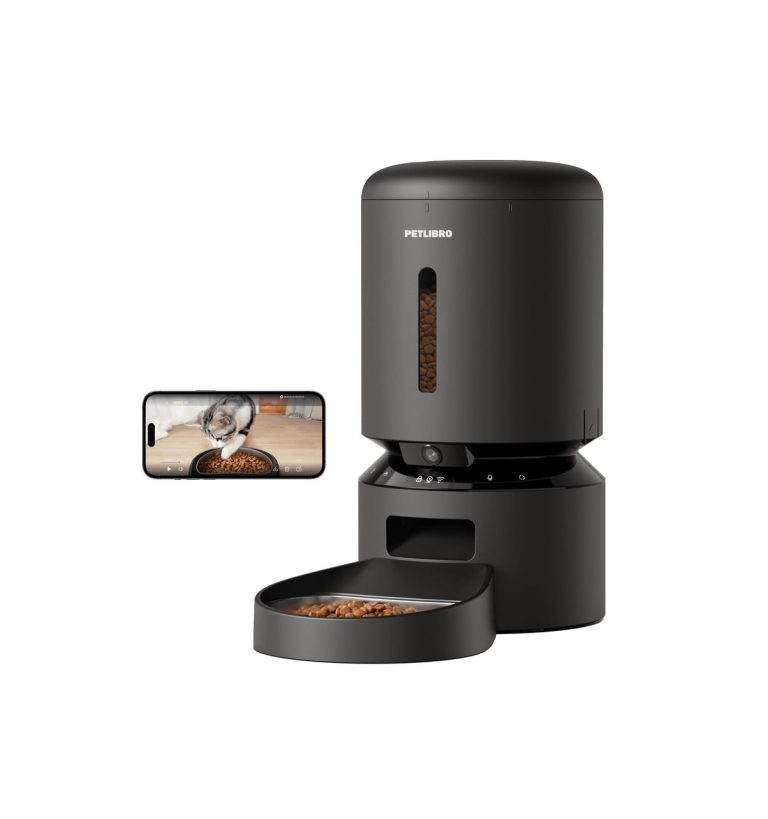
The PETLIBRO DockStream and the WOPET 6L Camera Feeder are two of the best-selling camera-equipped automatic cat feeders on the market. Both let you watch your cat eat via a built-in camera, both offer app-based scheduling, and both use stainless steel bowls. But they sit at different price points. The DockStream is $139.99 and the WOPET 6L is $109.99, and the differences go beyond price.
PETLIBRO’s DockStream has been a consistent top seller with 9,400+ Amazon reviews and a reputation for app reliability. WOPET’s 6L Camera Feeder has 6,200+ reviews and offers a larger hopper at a lower price. If you are trying to decide between these two, you are choosing between app polish and camera quality (PETLIBRO) versus capacity and value (WOPET).
We tested both feeders side by side for two weeks. Here is exactly where they differ and which one you should buy.
At a Glance
| Feature | PETLIBRO DockStream | WOPET 6L Camera Feeder |
|---|---|---|
| Price | $139.99 | $109.99 |
| Hopper Capacity | 5L | 6L |
| Bowl Material | Stainless steel | Stainless steel |
| Camera Resolution | 1080p | 1080p |
| Night Vision | Yes (IR) | Yes (IR) |
| Two-Way Audio | Yes | Yes |
| Max Meals/Day | 4 | 4 |
| Portion Range | 1/4 cup to 1 cup | 1/4 cup to 1 cup |
| WiFi Support | 2.4GHz only | 2.4GHz only |
| Battery Backup | Yes | No |
| Noise Level | 44 dB | 48 dB |
| App Rating (iOS) | 4.6/5 | 4.2/5 |
| Warranty | 1 year | 1 year |
Camera and Video Quality
Both feeders offer 1080p cameras with IR night vision, but the actual image quality differs noticeably.
PETLIBRO DockStream: The camera sensor is slightly better in low-light conditions. Night vision is clearer with less grain. The 120-degree field of view captures the feeding area and some surrounding space. You can see your cat approach, eat, and leave. The app streams at a stable 15-20 FPS over WiFi.
WOPET 6L: The camera is adequate for daytime use but struggles in low light. Night vision is grainier and the image softens noticeably. The field of view is narrower at about 100 degrees. You see the bowl area but miss the approach. Streaming in the WOPET app drops frames more frequently, especially when not on the same network.
Winner: PETLIBRO DockStream. Better low-light performance and a wider field of view.
App Experience
PETLIBRO App
The PETLIBRO app is the most polished app in the automatic feeder space. Setup takes about 3 minutes. The home screen shows your feeder status, next scheduled meal, and a live camera feed. The scheduling interface uses a timeline format. Drag to set meal times, tap to adjust portion size.
Push notifications are reliable. You get a notification when food is dispensed, when the hopper is low, and when the bowl needs cleaning. The app rarely disconnects from the feeder.
WOPET App
The WOPET app gets the job done but feels a generation behind. The interface is less polished, with smaller buttons and a cluttered settings menu. Setup takes 5-7 minutes and occasionally requires restarting the process.
The biggest issue is connectivity. The WOPET app drops the WiFi connection more frequently than the PETLIBRO app. I had to reconnect the feeder to the app 3 times over the two-week test period. Push notifications arrive reliably when the connection holds.
Winner: PETLIBRO DockStream. A noticeably smoother app experience with better connectivity stability.
Hopper Capacity
The WOPET 6L hopper holds 1 liter more than the PETLIBRO DockStream’s 5L hopper. For a single cat on standard portions (1/2 cup per day), that difference means:
- PETLIBRO DockStream (5L): ~17 days between refills
- WOPET 6L: ~20 days between refills
Three extra days of capacity is meaningful if you travel frequently. For most households, the 5L hopper is already plenty for two-week stretches.
Winner: WOPET 6L. The extra capacity is a genuine advantage for extended travel.
Battery Backup
This is the single most important difference between the two feeders.
PETLIBRO DockStream includes a battery backup system that runs on 3 D batteries. If the power goes out, the feeder keeps its schedule and dispenses meals on time. Battery life in backup mode is approximately 4-6 weeks depending on meal frequency.
WOPET 6L has no battery backup. A power outage resets the feeder’s clock and schedule. When power returns, the feeder runs at factory default times, not your programmed schedule. This is a real problem if you travel or live in an area with frequent power fluctuations.
Winner: PETLIBRO DockStream, decisively. Battery backup is a safety net that the WOPET simply does not offer.
Portion Accuracy
Both feeders use an auger mechanism to dispense kibble. We tested both across three portion sizes:
| Setting | PETLIBRO DockStream | WOPET 6L |
|---|---|---|
| 1/4 cup | +3% accuracy | +8% accuracy |
| 1/2 cup | +2% accuracy | +5% accuracy |
| 1 cup | +4% accuracy | +12% accuracy |
The PETLIBRO DockStream is consistently more accurate, especially at larger portion sizes. The WOPET showed noticeable drift at the 1-cup setting, averaging close to 1/8 cup more than expected.
Winner: PETLIBRO DockStream. Better calibration consistency across all portion sizes.
Build Quality and Design
Both feeders use a combination of plastic body and stainless steel bowl. The difference is in the details.
PETLIBRO DockStream: The plastic feels denser and the seals around the hopper lid are tighter. The bowl tray clips in securely and does not shift during rotation. The camera housing is integrated into the main body, with no loose parts. The overall impression is a product designed to sit on your counter for years.
WOPET 6L: The plastic is thinner and the hopper lid seal is less effective. I noticed slight moisture infiltration during humid days. The bowl tray has more play and can shift if bumped. The camera module protrudes from the front, making the feeder slightly top-heavy.
Winner: PETLIBRO DockStream. Better materials and tighter construction.
Noise Level
The PETLIBRO DockStream measures 44 dB during dispensing, quieter than a typical refrigerator hum. The WOPET 6L measures 48 dB, which is still quiet but noticeably louder. The difference is most apparent at night when ambient noise is low. The PETLIBRO is less likely to wake a light-sleeping cat or owner.
Winner: PETLIBRO DockStream.
Two-Week Test Journal Highlights
Day 1 | Setup: PETLIBRO setup took 5 minutes from unboxing to first scheduled meal. WOPET setup required two attempts. The first pairing failed and I had to reset the feeder.
Day 3 | Night vision test: PETLIBRO showed a clear, grayscale image of the cat eating. WOPET image was noticeably softer; could not read the bowl markings.
Day 7 | App disconnect: WOPET feeder showed offline in the app. Required power cycling the feeder. PETLIBRO remained connected all week.
Day 10 | Battery backup test: Simulated power outage. PETLIBRO continued dispensing on schedule. WOPET lost its schedule. I came back to a midnight feeding at 8 AM.
Day 14 | Portion check: PETLIBRO portions remained consistent. WOPET 1-cup portions had drifted to 1.15 cups.
Which One Should You Buy?
Buy the PETLIBRO DockStream if:
- App reliability matters to you
- Power outages are common in your area
- You want the best camera quality at this price point
- Portion accuracy is important
- You are willing to pay a $30 premium for a better overall experience
Buy the WOPET 6L Camera Feeder if:
- Maximum hopper capacity is your top priority
- You are on a strict budget under $110
- Power outages are not a concern in your area
- You do not mind occasional app reconnections
- You value the extra 1L capacity over battery backup
Final Verdict
The PETLIBRO DockStream is the better feeder by a clear margin.
The $30 price difference buys you: a better camera with wider field of view, a more reliable app, battery backup that keeps your feeding schedule intact during power outages, better portion accuracy, quieter operation, and tighter build quality.
The WOPET 6L Camera Feeder is the better value proposition only if two things are true: you need the extra hopper capacity, and you are confident you will not lose power. For everyone else, the PETLIBRO DockStream at $139.99 is money well spent.
Camera-equipped feeders are a purchase you will interact with daily for years. The small premium for the PETLIBRO DockStream avoids the small frustrations like fuzzy night vision, dropped connections, and lost schedules that make the WOPET feel like a compromise.