Automatic Cat Feeders with Non-Plastic Bowls: Best Ceramic and Stainless Steel Options for Chin Acne Prevention 2026
As an Amazon Associate, we may earn commissions from qualifying purchases. This does not affect the accuracy of our recommendations.
Automatic Cat Feeders with Non-Plastic Bowls: Best Ceramic and Stainless Steel Options for Chin Acne Prevention 2026
Category: Guides
2. Cat Mate C5000 — Best Stainless Steel with Slow-Feed Lid
Price: ~$80-100
Capacity: 3.6L (5 compartments)
Power: AC adapter + 4 D batteries
Bowl material: Stainless steel compartments with plastic slow-feed lid
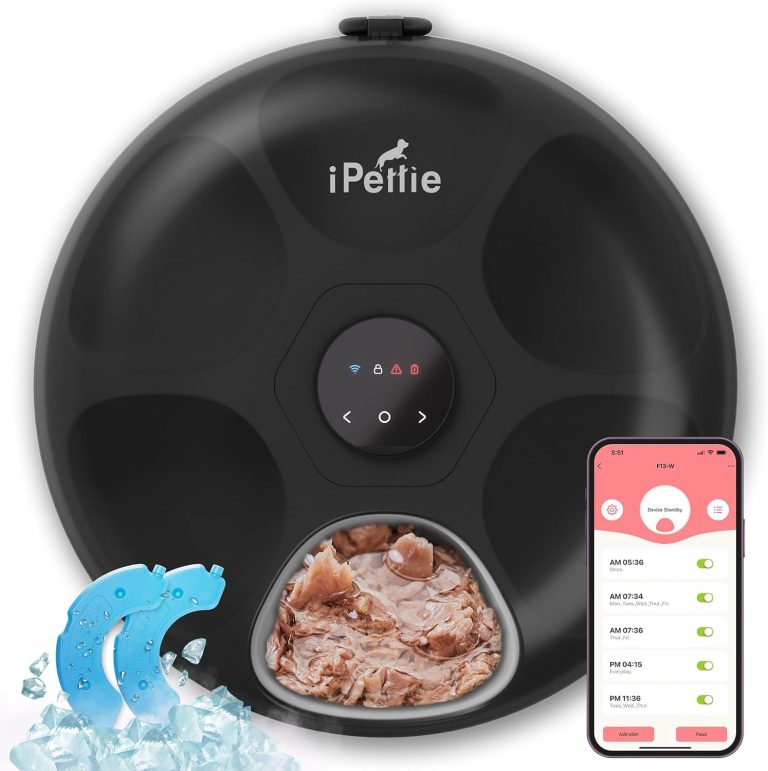
The Cat Mate C5000 uses stainless steel compartments for food contact, which solves the primary hygiene concern. Each of its five compartments is a stainless steel tray that lifts out for washing.
Why it works for chin acne:
– Stainless steel food compartments — non-porous, scratch-resistant
– Dishwasher safe compartments — easy to sanitize daily
– Slow-feed lid — the lid is plastic, but food contacts only the steel tray beneath
– Ice pack compartments — no plastic melt concerns with wet food
Best for: Multi-meal schedules where you need portion control and stainless hygiene. The compartments are robust and easy to clean.
Limitation: The slow-feed lid is plastic and contacts the cat’s chin during eating — you can leave it off if your cat doesn’t need slow-feed. The tray itself is stainless but the surrounding frame is plastic.
4. WOPET Automatic Feeder — Budget Stainless Steel Option
Price: ~$50-70
Capacity: 3.5L
Power: AC adapter + 3 AA batteries
Bowl material: Stainless steel
WOPET’s standard automatic feeder line uses removable stainless steel bowls at a budget-friendly price. The bowl lifts out for cleaning and resists scratching better than the plastic bowls found on similarly priced competitors.
Why it works for chin acne:
– Stainless steel bowl — affordable alternative to premium brands
– Removable and dishwasher safe
– Large capacity — less frequent refilling means less handling
– Programmable up to 4 meals — portion control supports acne prevention by keeping food fresh
Best for: Budget-conscious owners who need a reliable stainless steel feeder without spending over $100.
Limitation: The auger delivery mechanism is plastic. While the bowl itself is steel, kibble passes through a plastic chute before reaching the bowl.
How to Tell if Your Feeder Bowl Is Causing Acne
Chin acne from plastic bowls follows a predictable pattern:
- Black or brown specks appear on the chin and lower lip
- Specks look like dirt or flea dirt but don’t brush off
- The chin may feel bumpy (clogged follicles)
- In severe cases, the chin swells or develops pustules
Test it: Switch to a stainless or ceramic bowl for 2 weeks. If the specks fade or stop worsening, plastic was the trigger. If the acne persists, consult your vet — there may be other causes (allergies, stress, hormonal).
Cleaning Protocol for Acne-Prone Cats
Even with the right bowl material, hygiene matters:
- Wash bowls daily — hot water and mild soap, or dishwasher
- Dry completely — bacteria thrive in moisture
- Replace bowls at first sign of scratches — even stainless steel can wear over years
- Wipe the feeder housing — crumbs and oil collect around the bowl rim
- Use separate bowls for wet and dry food — wet food residue breeds bacteria faster
FAQ
Q: Can I replace a plastic bowl with a ceramic one in any feeder?
A: Not always. Some feeders use proprietary bowl shapes. Check whether the bowl is removable and standard-sized. Aftermarket ceramic bowls work with many models, but you need to confirm fit.
Q: Is stainless steel or ceramic better for chin acne?
A: Both are excellent. Ceramic is heavier (less tipping) and often preferred by whisker-sensitive cats. Stainless steel is more durable and dishwasher-safe. Choose based on your feeder’s compatibility.
Q: How long after switching bowls does acne improve?
A: Most cats show improvement within 1-2 weeks. Full resolution can take 3-4 weeks as the clogged follicles clear. If you see no improvement after 4 weeks, consult your vet.
Q: Do slow-feed bowls cause acne?
A: Slow-feed bowls made of plastic can. If your cat needs slow-feed, choose a stainless or ceramic slow-feed bowl specifically, or use a slow-feed insert that sits on top of a non-plastic base bowl.
Q: Are there any automatic feeders with removable ceramic bowls?
A: The SureFeed Microchip Feeder is the most prominent model with a removable ceramic bowl. Some European brands also offer ceramic options. Most automatic feeders use stainless steel if they offer non-plastic bowls.
Verdict
If your cat has chin acne, the SureFeed Microchip Feeder with its ceramic bowl is the safest choice — ceramic is non-porous, scratch-resistant, and the microchip access reduces chin contact time overall. For a more affordable option, the Cat Mate C5000’s stainless steel compartments give you excellent hygiene with the bonus of multi-meal scheduling.
Skip any feeder with non-removable plastic bowls. The daily cleaning effort and long-term bacterial buildup aren’t worth the risk when stainless and ceramic options exist at every price point.