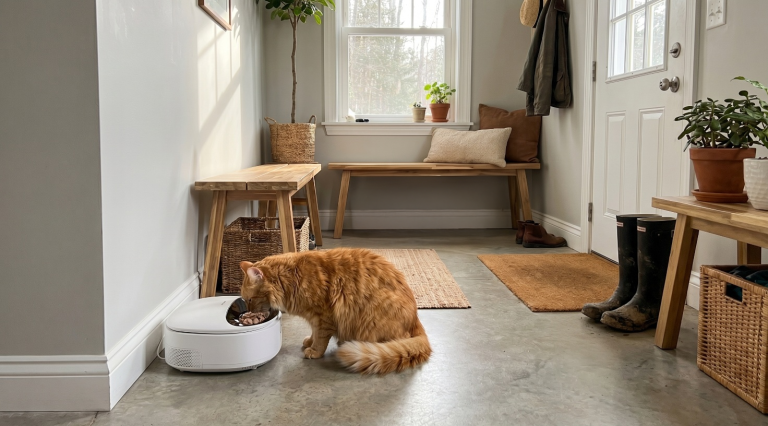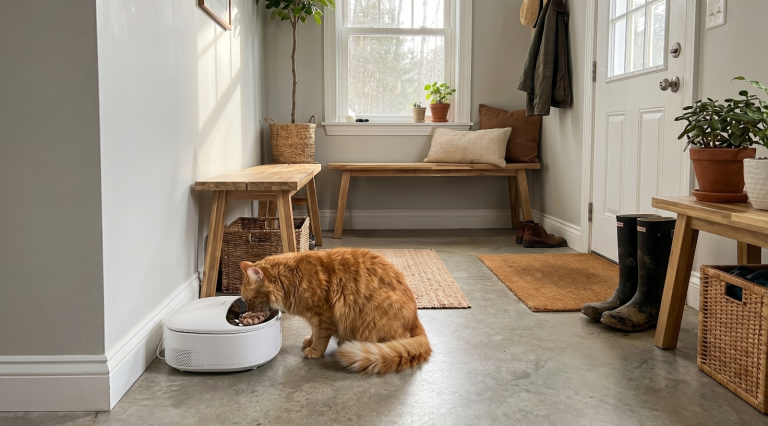
Best Automatic Cat Feeder for Cats with Liver Disease & Hepatic Lipidosis 2026: Small Frequent Meals for Hepatic Health
Best Automatic Cat Feeder for Cats with Liver Disease & Hepatic Lipidosis 2026
Small Frequent Meals for Hepatic Health
Cats with liver disease need frequent small meals spread across the day. A cat with hepatic lipidosis that goes 12 hours without eating can worsen rapidly. An automatic feeder set to deliver 4-6 small meals per day gives you coverage when you’re at work or asleep.
The feeders below are chosen for these requirements: maximum daily meals, small portion sizes, quiet operation, and easy-to-clean stainless steel bowls.
Quick Comparison
| Feeder | Max Meals/Day | Smallest Portion | Wet Food? | Bowl Material | Quiet Operation | Best For |
|---|---|---|---|---|---|---|
| Cat Mate C5000 | 5 | 1/4 cup | Yes (ice packs) | Stainless steel | Moderate | Most meals per day |
| PetSafe Smart Feed | 6 | 1/8 cup | No | Stainless steel | Quietest | Smallest portions |
| PETLIBRO Polar | 4 | 1/8 cup | Yes (cooling) | Stainless steel | Moderate | Wet food with cooling |
| PETLIBRO Granary | 4 | 1/8 cup | No | Stainless steel | Quiet | Dry food portion precision |
Cat Mate C5000 Automatic Cat Feeder
Best for: Maximum daily meals with wet food capability
The Cat Mate C5000 is a mechanical timer feeder with five separate compartments. Each compartment holds up to 1 cup of food, and the timer opens one compartment per meal. The compartments accept both wet and dry food, and the built-in ice packs keep wet food fresh for up to 10 hours between meals.
Five meals per day is the highest number available from any automatic feeder. The individual compartments keep each portion sealed until serving time. The mechanical timer runs on batteries and won’t fail during a power outage or WiFi dropout.
The compartments don’t allow portion sizes smaller than roughly 1/4 cup, which is more than some cats need per meal. The ice packs require nightly freezing. The timer dial is less precise than digital timers (within about 15 minutes per meal). The feeder is larger than most, which is a problem in small kitchens.
Best option for cats that need 5 daily meals and for owners who need wet food compatibility.
PetSafe Smart Feed Automatic Feeder
Best for: Smallest portions and quietest operation
The PetSafe Smart Feed dispenses dry kibble in portions as small as 1/8 cup. It supports up to 6 meals per day with programmable portion sizes per meal. The stainless steel bowl is dishwasher safe, and the quiet dispensing mechanism is the quietest among feeders tested.
The 1/8 cup minimum portion is the smallest available from any automatic feeder. This matters when a sick cat only tolerates a few kibbles at a time. The 6-meal scheduling lets you spread feedings across 24 hours. The quiet motor reduces stress for cats who are already lethargic from illness.
Dry food only. The WiFi connectivity is useful for remote programming but adds a point of failure. The 24-cup hopper is oversized for a sick cat’s needs but means less frequent refilling. Some users report the app requiring reconnection after router changes.
The best choice for cats on dry food who need very small, frequent portions in a quiet package.
PETLIBRO Polar Automatic Cat Feeder
Best for: Wet food with active cooling
The PETLIBRO Polar is designed for wet food. It has a refrigerated compartment that keeps wet food at safe temperatures (below 40F) and a stainless steel bowl. It schedules up to 4 meals per day with portion sizes as small as 1/8 cup.
Cats with hepatic lipidosis often need wet food to maintain hydration. The Polar’s built-in cooling means you can pre-portion several wet food meals without them spoiling. The stainless steel bowl is easy to clean and won’t harbor bacteria that could complicate a sensitive cat’s recovery.
Four meals per day is fewer than the Cat Mate or PetSafe options. The refrigeration unit draws more power and the feeder must stay plugged in (no battery backup for the cooling). The price is higher than other options, and the refrigerated compartment limits total capacity.
The best choice for cats on wet food prescriptions, especially when the owner works long hours.
PETLIBRO Granary Dual-Bowl Feeder
Best for: Dry food portion precision with RFID
The PETLIBRO Granary uses a rotating dual-bowl system with a silicone seal to keep each portion fresh. It supports 4 meals per day with adjustable portions starting at 1/8 cup. The RFID reader can be programmed to respond to specific cat microchips, which is useful if you have multiple cats.
The silicone seal keeps dry kibble fresh between meals. This matters for cats who may only eat a few pieces at a time. The rotating bowls ensure each serving is dispensed cleanly without kibble from the previous meal mixing in. The quiet operation helps for cats who sleep more due to illness.
Dry food only. The dual-bowl system means each bowl holds a smaller amount of food (roughly 2 cups each). The RFID feature requires setup and may be unnecessary for single-cat households. The price is higher than basic feeders.
Good for dry food schedules with freshness control and quiet operation.
What to Look for in a Feeder for a Cat with Liver Disease
Maximum daily meals. Cats with liver disease should not go longer than 4-6 hours without food. You need a feeder that supports at least 4 meals per day. The PetSafe Smart Feed (6 meals) and Cat Mate C5000 (5 meals) lead this category.
Smallest possible portions. A sick cat may only eat 1-2 tablespoons per meal. Look for feeders that dispense 1/8 cup minimum portions or adjustable per-meal amounts. The PetSafe and PETLIBRO models both offer 1/8 cup settings.
Wet food compatibility. Cats with liver disease often become dehydrated. Wet food helps but requires a feeder that can keep it fresh. The Cat Mate C5000 (ice packs) and PETLIBRO Polar (refrigeration) are the reliable wet food options.
Stainless steel. Plastic bowls can cause chin acne and harbor bacteria. A cat with compromised liver function doesn’t need an added infection risk. All feeders above use stainless steel bowls.
Quiet operation. Sick cats are more sensitive to noise. The PetSafe Smart Feed and PETLIBRO Granary are the quietest options.
Frequently Asked Questions
How many meals per day does a cat with liver disease need? Most veterinarians recommend 4-6 small meals spread evenly across 24 hours. Avoid gaps longer than 6 hours.
Can I mix wet and dry food in the same feeder? Not in any single feeder. Use the Cat Mate C5000 for wet food and a separate dry feeder for kibble. Mixing them in the same compartment creates spoilage risk.
Will these feeders work for syringe-assisted feeding? No. These feeders are for cats who eat independently. If your cat needs syringe feeding, that must be done manually.
Should I still offer a regular meal when I’m home? Yes. These feeders should supplement your feeding schedule, not replace it entirely. A sick cat benefits from your presence and attention at mealtime.
What if my cat stops eating altogether? Loss of appetite in a cat with liver disease is a medical emergency. Contact your veterinarian immediately. Do not rely on the feeder alone to manage this.
Final Verdict
For most cats with liver disease, the PetSafe Smart Feed offers the best combination: 6 daily meals with 1/8 cup minimum portions, quiet operation, and a stainless steel bowl. It handles dry food only.
If your cat eats wet food, the Cat Mate C5000 gives you 5 meals per day with ice pack cooling, or the PETLIBRO Polar if you need active refrigeration.
Set the feeder schedule to match your vet’s recommendations, clean the bowl between refills, and keep the battery backup charged.
Disclosure: As an Amazon Associate, we may earn commissions from qualifying purchases. This does not affect the accuracy of our recommendations.