Automatic Cat Feeder Material Safety Guide: BPA-Free, Stainless Steel and Ceramic for Chin Acne Prevention
Automatic Cat Feeder Material Safety Guide: BPA-Free, Stainless Steel and Ceramic for Chin Acne Prevention
Target Keyword: automatic cat feeder material safety bpa free stainless steel ceramic chin acne
Page Type: Buying Guide
Category: Guides
Site: bestcatfeeder.com
Internal Link Target: best-automatic-cat-feeder
Introduction
When choosing an automatic cat feeder, most people focus on features like scheduling, capacity, and smart connectivity. But there’s a critical factor that’s often overlooked: the materials that touch your cat’s food.
Feline chin acne, allergic reactions, and even long-term health issues can be traced back to the materials used in your cat’s feeder. Plastic bowls harbor bacteria in microscopic scratches, BPA-based plastics may leach chemicals into food, and even stainless steel has grades that matter.
This guide breaks down everything you need to know about automatic cat feeder materials — what’s safe, what to avoid, and which feeders prioritize your cat’s health through better material choices.
The Chin Acne Connection
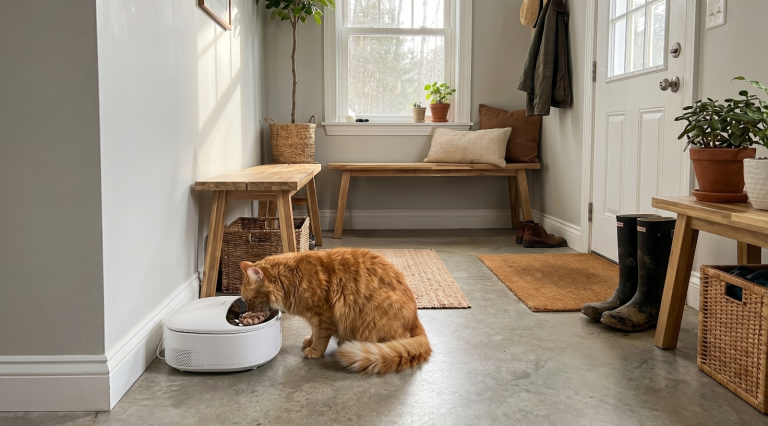
Feline chin acne is one of the most common dermatological issues seen in cats, and the primary environmental cause is plastic feeding bowls.
How Plastic Bowls Cause Chin Acne
- Microscopic scratches develop in plastic surfaces over time
- Bacteria and food residue accumulate in these scratches
- The bacteria transfer to your cat’s chin during eating
- Hair follicles become infected and inflamed
- Blackheads, red bumps, and scabs develop on the chin
A 2019 study published in the Journal of Feline Medicine and Surgery found that switching from plastic to stainless steel or ceramic bowls resolved or improved chin acne in over 70% of cases — often without any other treatment.
Beyond Chin Acne
Material safety concerns go beyond chin acne:
- BPA and BPS leaching — endocrine-disrupting chemicals that can leach from polycarbonate plastics, especially with warm or fatty foods
- Contact dermatitis — some cats develop allergic reactions to certain plastics or metal alloys
- Odor absorption — plastic absorbs food odors and bacteria over time, becoming unhygienic
- Scratching and bacterial growth — scratched plastic provides breeding grounds for bacteria regardless of cleaning frequency
Material Comparison
1. Stainless Steel — The Gold Standard
Safety rating: ⭐⭐⭐⭐⭐
Common grades: 304 (food-grade), 316 (marine-grade)
Chin acne risk: Very low
Durability: Excellent
Cleaning: Dishwasher safe
Weight: Light to moderate
Cost: Moderate
Why stainless steel is best:
- Non-porous surface — bacteria cannot penetrate the material
- Scratch-resistant — high-quality 304 stainless steel won’t develop micro-scratches
- Dishwasher safe — can be sanitized at high temperatures
- Chemical-free — no BPA, BPS, or other plasticizers
- Odor resistant — doesn’t absorb food smells
- Long lifespan — stainless steel bowls can last for years with proper care
What to look for:
- Grade 304 (18/8) or 316 stainless steel — these are food-safe grades
- Weighted or non-skid base — prevents sliding during eating
- Flared or rolled edges — prevents food from getting trapped in rim seams
- Dishwasher-safe indication — confirms heat tolerance
Avoid:
- Low-grade “stainless” that may contain nickel alloys that leach
- Bowls with welded seams that can trap bacteria
- Chrome-plated bowls (the chrome can flake off)
Best stainless steel automatic feeders:
- PETLIBRO Granary (304 stainless steel dual bowls)
- PetSafe Smart Feed (removable stainless steel bowl)
- WOPET feeders (stainless steel bowl on most models)
- Amazon Basics automatic feeder (stainless steel bowl)
- Arf Pets feeder (stainless steel bowl)
2. Ceramic — Premium and Hygienic
Safety rating: ⭐⭐⭐⭐⭐
Common types: Porcelain, stoneware, glazed ceramic
Chin acne risk: Very low
Durability: Good (but breakable)
Cleaning: Dishwasher safe
Weight: Heavy (non-skid)
Cost: Moderate to high
Why ceramic is excellent:
- Non-porous glazed surface — when properly glazed, ceramic is as hygienic as glass
- Heavy and stable — doesn’t slide across floors during eating
- No chemical leaching — high-quality ceramic is chemically inert
- Dishwasher safe — can be sanitized at high temperatures
- Aesthetic variety — wide range of colors and designs available
Important caveats:
- Only if properly glazed — unglazed or poorly glazed ceramic can harbor bacteria
- Lead and cadmium risk — low-quality ceramic may use lead-based glazes; always choose food-safe, lead-free ceramic
- Breakable — ceramic bowls can chip, crack, or break if dropped
- Limited automatic feeder options — very few automatic feeders use ceramic bowls
What to look for:
- Lead-free, food-safe glaze certification
- Smooth, glossy finish — no cracks, chips, or rough spots
- Dishwasher-safe confirmation
- FDA or LFGB food contact certification
Best ceramic automatic feeders:
Unfortunately, most automatic feeders use stainless steel or plastic bowls rather than ceramic. Ceramic is more commonly found in manual feeding bowls. If you prefer ceramic, consider using a ceramic bowl with a feeder that has a removable tray.
3. BPA-Free Plastic — Acceptable with Caveats
Safety rating: ⭐⭐⭐
Common types: Polypropylene (PP #5), Tritan copolyester, ABS
Chin acne risk: Moderate
Durability: Moderate
Cleaning: Usually dishwasher safe (top rack)
Weight: Light
Cost: Low
What “BPA-Free” actually means:
BPA-free plastic is better than standard plastic, but it’s important to understand the limitations:
- BPA is replaced with BPS or BPF — these alternatives may have similar endocrine-disrupting properties (research is ongoing)
- Plastic still scratches — BPA-free plastic is still susceptible to micro-scratches that harbor bacteria
- Heat sensitivity — plastic can degrade at dishwasher temperatures, accelerating wear
- Limited lifespan — plastic bowls should be replaced every 6-12 months
When BPA-free plastic is acceptable:
- For short-term use (travel, temporary setups)
- In feeders where the plastic doesn’t contact food (hopper only, not the bowl)
- When stainless steel or ceramic options aren’t available
- If you replace the bowl regularly
Best practice with plastic feeders:
- Replace the bowl every 6 months
- Hand wash with mild soap (avoid dishwasher heat cycles)
- Discard immediately if scratches appear
- Only use for dry kibble (not wet food, which accelerates degradation)
Feeders with BPA-free plastic bowls (acceptable):
- Cat Mate C5000 (BPA-free plastic compartments — replace every 6-12 months)
- PETKIT feeders (BPA-free plastic food-grade materials)
- oneisall feeders (BPA-free plastic bowls on some models)
4. Silicone — For Seals and Non-Slip Bases
Safety rating: ⭐⭐⭐⭐
Common uses: Sealing gaskets, non-slip bases, slow-feed inserts
Chin acne risk: Low
Durability: Good
Cleaning: Dishwasher safe
Weight: Very light
Safety notes:
- Platinum-cured silicone is food-safe and doesn’t leach chemicals
- Avoid silicone with fillers — pure silicone should be flexible, not brittle
- Silicon vs silicone — these are different materials; silicone (with an -e) is the rubber-like material used in food products
- Not for bowl use — silicone is too soft for a feeding bowl; it’s best for gaskets, slow-feed inserts, and non-slip bases
Material Safety Comparison Table
| Material | Chin Acne Risk | Chemical Leaching | Durability | Hygiene | Auto Feeder Availability | Cost Impact |
|---|---|---|---|---|---|---|
| Stainless Steel (304) | Very Low | None | Excellent | Excellent | Widely available | $ |
| Ceramic (glazed) | Very Low | None (if lead-free) | Good (breakable) | Excellent | Rare | $$ |
| Stainless Steel (low grade) | Low | Possible nickel | Moderate | Good | Some budget models | $ |
| BPA-Free Plastic | Moderate | Possible BPS/BPF | Moderate | Moderate | Very common | $-$$ |
| Standard Plastic | High | BPA/BPS | Low | Poor | Common (avoid) | $ |
| Platinum Silicone | Low | None | Good | Good | Seals/inserts only | $ |
Toxic Materials to Avoid at All Costs
1. Polycarbonate Plastic (#7)
Polycarbonate contains BPA, which can leach into food — especially with warm, fatty, or acidic foods. Most manufacturers have phased out polycarbonate, but some cheap import feeders may still use it.
2. Lead-Glazed Ceramic
Low-quality, imported ceramic bowls may use lead-based glazes. Testing by consumer safety groups has found lead levels exceeding safe limits in some pet bowls labeled “ceramic” or “handmade.”
3. Chrome-Plated Metal
Chrome plating can flake off over time, and the underlying metal may contain nickel or other allergens. Avoid any feeder with chrome-plated components that contact food.
4. PVC (Vinyl)
PVC contains phthalates, which are endocrine disruptors. PVC should never be used in food-contact applications for pets.
5. Melamine
While durable, melamine can leach formaldehyde when exposed to high temperatures or acidic foods. Not recommended for pet feeding bowls.
How to Choose the Safest Automatic Feeder
Decision Framework
Step 1: Check the bowl material
- Stainless steel (304 grade) = ideal
- Ceramic (lead-free, glazed) = excellent alternative
- BPA-free plastic = acceptable for dry food only, replace frequently
- Standard plastic = avoid
Step 2: Check the hopper/reservoir material
- The bowl gets the most attention, but food sits in the hopper for days or weeks
- Stainless steel hoppers are rare but ideal
- BPA-free plastic hoppers are acceptable for dry kibble
- Replace the hopper if it develops scratches or odors
Step 3: Check for certifications
- FDA food contact compliant
- LFGB (German/Food, Commodities and Feed Code — stricter than FDA)
- BPA-free certification
- Proposition 65 compliant (California — screens for toxic chemicals)
Step 4: Consider the feeding bowl accessibility
- Removable bowls are easier to clean thoroughly
- Fixed bowls tend to have crevices where food accumulates
- Dishwasher-safe confirmation is a plus
Top Material-Safe Automatic Feeders
| Feeder | Bowl Material | Hopper Material | Chin Acne Score | Price Range |
|---|---|---|---|---|
| PETLIBRO Granary | 304 Stainless Steel | BPA-free PP | Excellent | $$ |
| PetSafe Smart Feed | Stainless Steel | BPA-free Plastic | Excellent | $$ |
| WOPET Smart Feeder | Stainless Steel | BPA-free Plastic | Excellent | $ |
| Amazon Basics | Stainless Steel | BPA-free Plastic | Excellent | $ |
| Arf Pets | Stainless Steel | BPA-free Plastic | Excellent | $ |
| PETLIBRO Polar | Stainless Steel | BPA-free Plastic | Excellent | $$$ |
| Cat Mate C5000 | BPA-free Plastic | BPA-free Plastic | Good (replace bowls) | $$ |
| PETKIT YumShare | BPA-free Plastic | BPA-free Plastic | Good (replace bowls) | $$ |
Cleaning and Maintenance Best Practices
Daily Cleaning
- Rinse the bowl after each meal (wet food) or daily (dry food)
- Wipe the hopper opening to remove dust and food debris
- Check for visible scratches or wear on the bowl surface
Weekly Deep Cleaning
- Wash the bowl in hot, soapy water or dishwasher (if dishwasher-safe)
- Clean the hopper with warm, soapy water; rinse thoroughly
- Dry completely before reassembling to prevent bacterial growth
- Check seals and gaskets for wear or mold
Monthly Maintenance
- Inspect all food-contact surfaces for scratches, cracks, or discoloration
- Replace plastic bowls if any scratches are visible
- Descale stainless steel if hard water deposits are present
- Run a cleaning cycle with diluted vinegar (for removable components)
Replacement Schedule
| Component | Material | Replace When |
|---|---|---|
| Bowl | Stainless steel | Damaged or misshapen |
| Bowl | Plastic | Every 6-12 months |
| Bowl | Ceramic | Immediately if chipped or cracked |
| Hopper | Plastic | Every 12-18 months |
| Seals/gaskets | Silicone | When cracked or hardened |
| Slow-feed insert | Silicone/plastic | When worn or tearing |
Special Considerations
For Cats with Chin Acne
If your cat already has chin acne:
- Switch to stainless steel immediately — this alone resolves most cases
- Clean the bowl after every meal (not just daily)
- Consider a shallow, wide bowl to minimize chin contact
- Replace any plastic components the feeder touches
For Cats with Allergies
Cats can develop allergies to:
- Nickel (found in low-grade stainless steel) — choose 304 or 316 grade
- Food dyes (in colored plastic bowls) — choose clear or white plastics
- Silicone additives — choose platinum-cured, filler-free silicone
For Senior Cats or Cats with Dental Issues
- Ceramic is quieter — no metal-on-metal clatter from tags hitting stainless steel
- Wide, shallow bowls reduce whisker fatigue and chin contact
- Non-skid bases prevent the bowl from sliding during eating
- Avoid tall bowls that require bending (elevated feeders are separate)
FAQ
Is stainless steel always safe for cat feeders?
Yes, when it’s food-grade (304 or 316). Low-grade stainless may contain nickel that can leach, but most pet feeder manufacturers use food-grade stainless steel. If you see “stainless steel” listed without a grade, it’s almost certainly 304 — the standard for food-contact applications.
Can I use a ceramic bowl with an automatic feeder?
Most automatic feeders have non-removable or proprietary bowls. If your feeder’s bowl is removable, you may be able to swap it for a ceramic one — but check the fit first. Some feeders have sensor mechanisms that depend on the original bowl design.
How often should I replace plastic feeder parts?
Every 6-12 months, or immediately if you see scratches, clouding, or discoloration. Plastic degrades over time even with proper cleaning.
Does BPA-free mean the plastic is completely safe?
BPA-free is better than standard plastic, but the replacements (BPS, BPF) may have similar health concerns. Stainless steel or ceramic is always preferable when available.
My feeder’s hopper is plastic but the bowl is stainless steel. Is that OK?
Yes — if the bowl is stainless steel, the food-contact surface is safe. The hopper stores dry kibble, which has minimal leaching risk compared to wet food. Just clean the hopper regularly and replace it if it develops odors or scratches.
Conclusion
The material your automatic cat feeder is made from directly impacts your cat’s health — from chin acne prevention to long-term chemical exposure. Stainless steel (304 grade) is the clear winner for food-contact surfaces, offering the best combination of hygiene, durability, and safety.
When shopping for an automatic feeder, prioritize models with removable stainless steel bowls, and avoid plastic bowls that contact food directly. If you choose a feeder with plastic components, commit to regular replacement and check for wear frequently.
For most cat owners, the PETLIBRO Granary (304 stainless steel dual bowls) or PetSafe Smart Feed (stainless steel bowl) provide excellent material safety combined with modern smart features. Budget-conscious buyers can choose WOPET or Amazon Basics for stainless steel bowls at lower price points.
Your cat’s health starts with what goes into their bowl — and the bowl itself matters just as much as the food it contains.
As an Amazon Associate, we may earn commissions from qualifying purchases. This does not affect the accuracy of our recommendations.