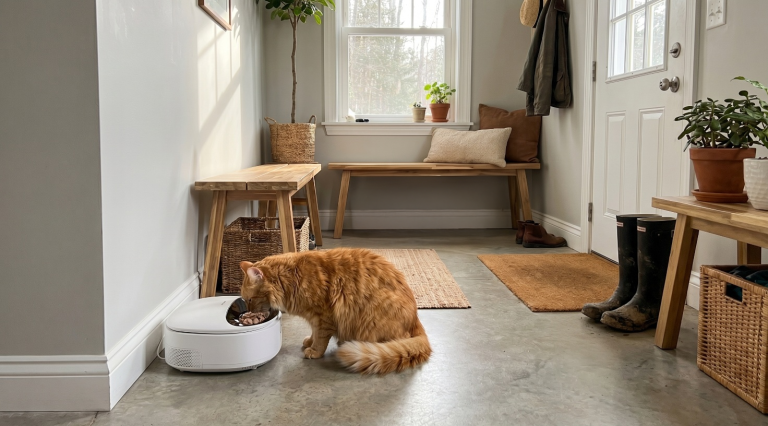
Best Automatic Cat Feeder for Raw Food 2026: Frozen-Meal Friendly Picks
Raw feeding changes the job. A normal automatic feeder is built for dry kibble, not chilled portions that need to stay safe for hours. If you want automation for raw-fed cats, the feeder has to solve two problems at once: timing and temperature.
That usually means a cooled feeder, insulated compartments, or a setup that keeps each meal frozen until the opening cycle begins. A standard hopper feeder is the wrong tool here.
Best picks by use case
| Use case | Best choice | Why it works | Watch out |
|---|---|---|---|
| Short trips | Ice-pack or chilled tray feeder | Keeps meals cold for a limited window | Needs a strict thaw schedule |
| Daily scheduling | Refrigerated feeder | Better temperature control and fewer food-safety surprises | Higher cost and more cleaning |
| One-meal portions | Single-bowl chilled feeder | Best for precise servings and less waste | Limited capacity |
| Backup feeding | Manual raw meal prep with chilled carrier trays | Good when you only need occasional automation | Less convenient than a true feeder |
What matters most for raw food
Raw food is less forgiving than dry kibble. The feeder must hold temperature, avoid cross-contamination, and make cleaning easy enough that you actually do it.
Look for:
- insulated compartments or active cooling
- removable bowls and trays
- tight seals that limit odor and moisture loss
- simple portions that can be pre-packed
- a design that is easy to sanitize between fills
My recommendation
If you feed raw regularly, the best choice is a refrigerated or actively chilled feeder. It gives you the widest safety margin and the least day-to-day guesswork.
If you only need a few hours of delay, an ice-pack-style feeder can work, but it has a narrow comfort zone. It is fine for a morning meal or a short outing. It is not a good fit for long workdays or hot rooms.
A standard dry feeder should not be used as a raw feeder unless you are only using it for short, chilled, fully supervised tests. Even then, the risk is high enough that most owners are better off choosing a purpose-built cooler.
Buying guide
1. Temperature control
This is the core decision. The question is not whether the feeder has a timer. It is whether the meal stays cold long enough to be safe.
2. Portion isolation
Raw meals should be separated into pre-measured servings. Do not rely on a feeder that exposes the entire batch at once.
3. Cleaning workflow
A feeder that is hard to clean will become a problem fast. Search for bowls and trays you can remove without tools.
4. Power backup
Cooling is useless if the power cuts out. Battery backup or an interruption plan matters more here than with a dry feeder.
5. Material choice
Stainless steel or food-safe hard plastic is easier to keep sanitary than soft, textured materials.
Raw-feeding setup tips
- Pre-portion meals before freezing or chilling.
- Keep the feeder out of direct sunlight.
- Clean all food-contact surfaces after each cycle.
- Watch the thaw window in warm weather.
- Test a full day before trusting it for a work trip.
- If the room runs warm, reduce the hold time instead of guessing.
When an automatic feeder is not the right answer
Sometimes the correct move is not a feeder at all.
Skip automation if:
- the room gets hot quickly
- you cannot clean the feeder daily
- your cat eats very small, frequent raw meals that are hard to portion automatically
- you need precise veterinary feeding control and cannot tolerate temperature drift
In those cases, a chilled meal prep system with manual serving may be safer than forcing a dry-feeder workflow onto raw food.
FAQ
Can I use a dry feeder for raw food?
Not as a default choice. Dry feeders are not designed for food safety in raw feeding.
Is ice enough for a full day?
Usually no. Ice-pack systems are short-window solutions, not all-day refrigeration.
What is the safest way to automate raw food?
Use a feeder with active cooling or refrigeration, keep portions small, and clean the food path after every use.
Verdict
The best automatic feeder for raw food is the one that treats temperature as the main feature, not an add-on. If you want convenience without compromising food safety, choose a chilled or refrigerated feeder, keep portions pre-made, and be strict about cleaning. For raw diets, discipline matters as much as hardware.