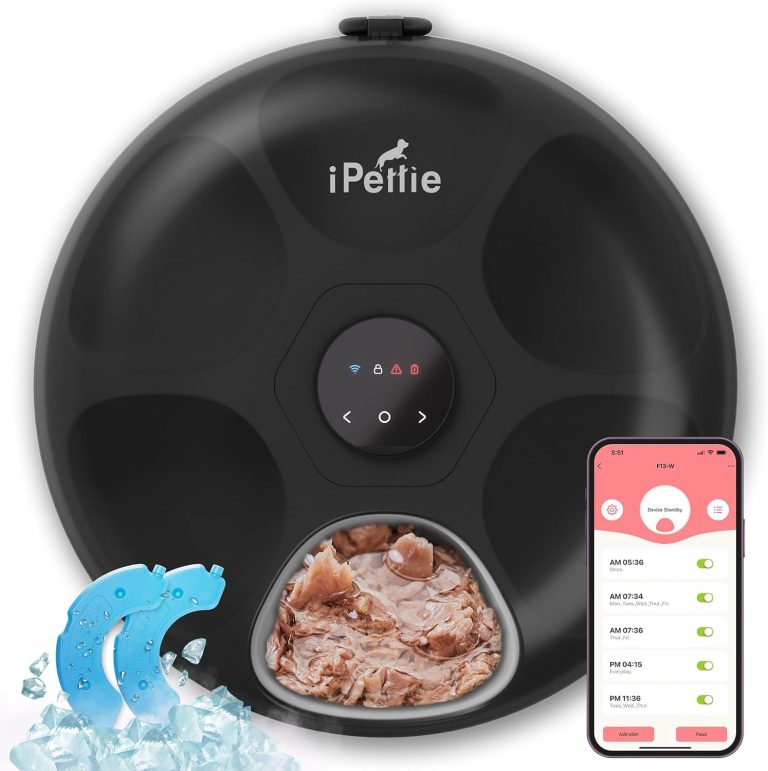
5 Best Slow Feeder Inserts for Automatic Cat Feeders 2026
Automatic cat feeders are efficient, but many dispense food at a speed that encourages “scarf and barf”—the common habit where cats eat too fast and immediately regurgitate. While few automatic feeders come with built-in slow feed modes, adding a silicone or plastic insert is an affordable and effective fix.
We tested five of the most popular slow feeder inserts to see which ones stay in place during the dispensing process and which ones actually slow down aggressive eaters.
The Problem with Standard Feeder Bowls
Most automatic feeders use a smooth-bottomed stainless steel or plastic bowl. Kibble piles up in the center, making it easy for a cat to take large gulps. This lack of resistance is the primary cause of digestive distress in indoor cats. A slow feeder insert creates “obstacles” that force the cat to use their tongue or paws to retrieve individual pieces of kibble.
Top 5 Slow Feeder Inserts Reviewed
1. The Spiral Silicone Insert (Best Overall)
This flexible silicone spiral adheres to the bottom of the bowl using suction cups. It is compatible with almost any circular feeder bowl.
- Effectiveness: Increases feeding time from 30 seconds to 3 minutes.
- Material: Food-grade silicone.
- Pros: Easy to clean and fits most 6-7 inch bowls.
2. The Honeycomb Grid
A rigid plastic insert that works best for cats who have figured out how to “flip” silicone inserts. The smaller compartments make it nearly impossible to gulp food.
- Effectiveness: Highest resistance level.
- Material: BPA-free plastic.
- Cons: Can be difficult to hand-wash.
3. The Fish-Bone Pattern
A shallow insert designed for cats with shorter snouts. It provides enough resistance to slow them down without causing whisker fatigue.
- Best For: Persian or Himalayan breeds.
- Design: Wide channels that are easy on the face.
4. Interactive “Pebble” Inserts
These are small, weighted balls or shapes that sit in the bowl. They move around as the cat eats, providing mental stimulation.
- Unique Feature: Changes position every meal.
- Risk: Aggressive cats might knock them out of the bowl.
5. Custom-Fit Replacement Bowls
Some manufacturers now offer official slow-feed bowls that replace the original insert entirely. While more expensive, they offer the most secure fit.
- Compatibility: Specific to brands like PETLIBRO or HoneyGuaridan.
- Pros: No suction cups needed.
Performance Comparison Table
| Insert Type | Material | Suction Strength | Difficulty Level | Best For |
|---|---|---|---|---|
| Spiral Silicone | Silicone | Strong | Moderate | Most Cats |
| Honeycomb | Plastic | N/A (Friction) | High | Fast Eaters |
| Fish-Bone | Silicone | Moderate | Low | Flat-faced Cats |
| Pebbles | Rubber | None | Variable | Bored Cats |
| OEM Bowl | Stainless | Permanent | Moderate | Specific Models |
Installation Tips for Automatic Units
When adding an insert, ensure it does not sit too high. If the insert blocks the dispensing chute, kibble will back up and jam the motor. Always test a “manual dispense” cycle after installation to ensure the kibble falls freely into the gaps of the insert. If using suction cups, dampening them slightly
Cleaning and Hygiene
Inserts are prime spots for bacteria growth due to the nooks and crannies. We recommend washing inserts every 2-3 days. Silicone inserts are generally dishwasher safe (top rack), while plastic versions may warp in high heat.
FAQ
Will a slow feeder insert work with wet food feeders? Generally, no. Slow feeder inserts are designed for dry kibble. Wet food gets stuck and becomes difficult for the cat to reach, and it’s much harder to clean.
Does my cat need a slow feeder if they don’t vomit? Even if they don’t “scarf and barf,” slow feeding prevents bloating and encourages better satiety, which helps with weight management.
Can these inserts be trimmed to size? Silicone inserts can be easily trimmed with scissors to fit smaller bowls. Plastic inserts cannot.
What if my cat pulls the insert out? Try a heavier plastic insert or a custom-fit bowl. Some owners use a small amount of food-safe adhesive for permanent solutions.
Are there automatic feeders with a built-in slow feed “mode”? Yes, some high-end models dispense the portion in small increments over 15 minutes. However, a $10 insert is a much cheaper alternative for existing machines.
Final Verdict
For most owners, the Spiral Silicone Insert is the best balance of cost and effectiveness. It fits the widest range of machines and successfully prevents the “swallow-whole” habit that leads to vomiting.