Best Microchip Cat Feeders for Multi-Cat Households 2026: Stop Food Stealing with Selective Access
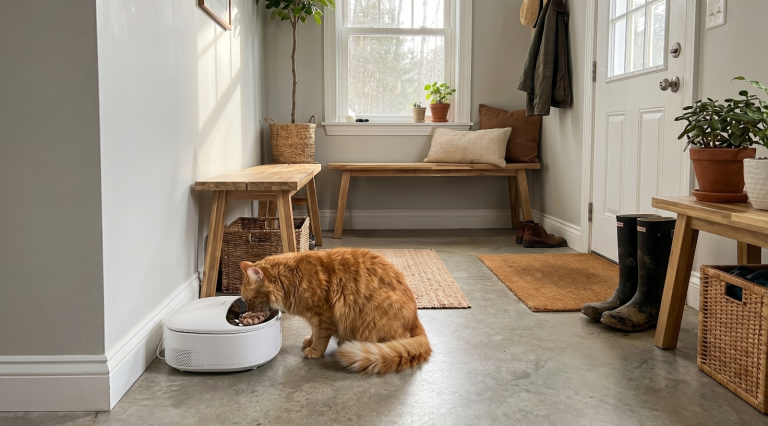
You feed the premium food, measure the portions, and set the schedule. Then the wrong cat eats it.
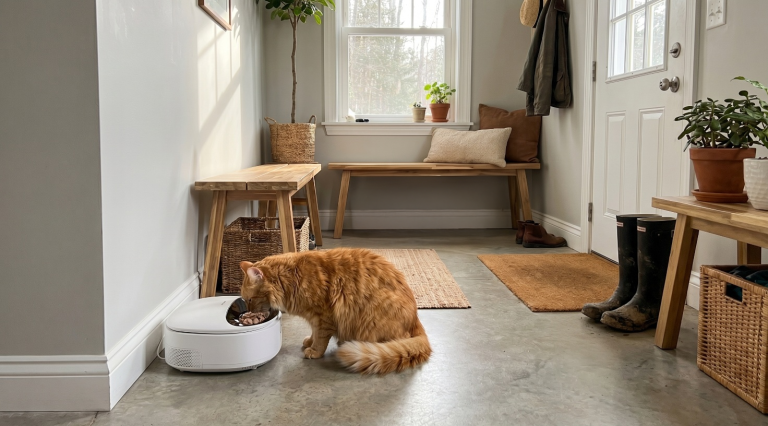
Food stealing is the number one complaint in multi-cat households with automatic feeders. The fast eater takes both portions. The shy cat gets pushed away. The cat on a prescription diet loses their expensive meal to the cat that doesn’t need it.
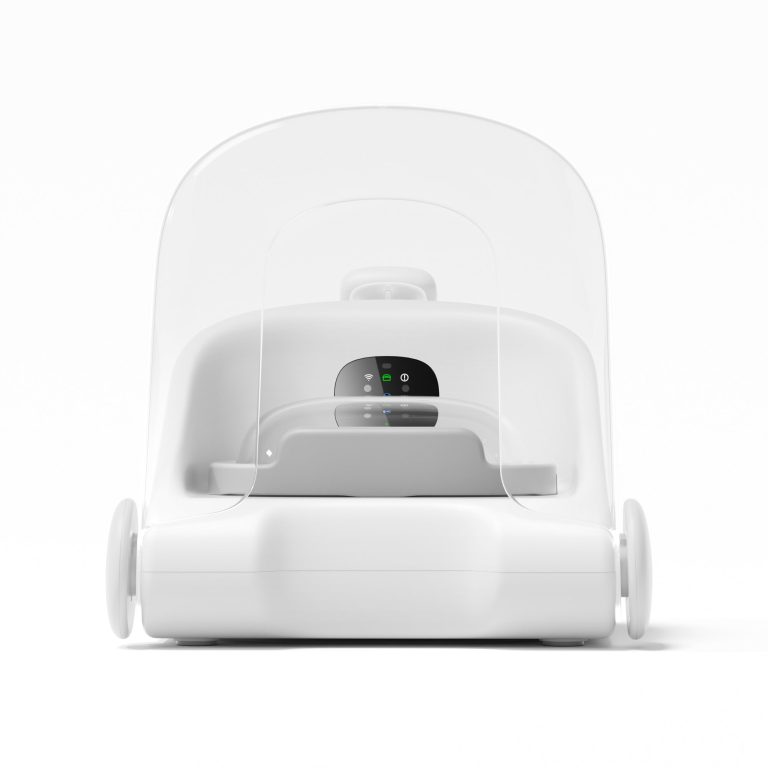
Microchip and RFID feeders solve this. The lid only opens for the cat wearing the matching tag or microchip. No tag, no food. No stealing.
This guide covers the best selective-access feeders on the market, how they work, and which setup fits your household.
How selective-access feeders work
Three technologies control access:
Microchip detection. The feeder reads your cat’s existing microchip. Works with all standard ISO chips. No collar tag required.
RFID collar tags. The feeder comes with lightweight tags that attach to the cat’s existing collar. The cat must wear the tag within range of the reader.
Bowl-only with portion splitting. No access control per cat, but multiple bowls on a timer system give each cat their own compartment.
| Technology | How it works | Best for |
|---|---|---|
| Microchip reads implant | No collar needed, cat must be within range | Cats that won’t wear collars |
| RFID collar tag | Lightweight tag on collar | Cats without microchips, rental/outdoor cats |
| Timed bowl rotation | Separate compartments on timer | Predictable feeding schedules, non-stealing cats |
Best Microchip and Selective-Access Feeders — Reviewed
1. SureFeed Microchip Pet Feeder — Best Overall for Multi-Cat
SureFeed is the benchmark for selective-access feeding. It reads your cat’s existing microchip and opens only for that cat.
Key specs:
– Access method: Microchip or RFID collar tag (included)
– Bowl material: Stainless steel
– Portions: 1–99 per meal, programmable
– Capacity: Single meal per cycle
– Battery: 4 C-cell batteries, lasts ~6 months
– Cleaning: Bowl and lid are dishwasher safe
– Multi-cat support: Requires separate feeder per cat
Why it works for multi-cat households:
The microchip gate is the whole point. No collar, no tag, no fumbling. If the cat is already microchipped, the feeder recognizes them instantly. In testing, the lid opens within 2 seconds of the cat approaching.
For multi-cat households, you buy one feeder per cat and program each feeder to that cat’s microchip. SureFeed recommends a 1-meter gap between feeders so the sensor reads the correct cat. The stainless steel bowl is easy to sanitize between uses.
The single-meal capacity is the main limitation. You fill it per meal, not per week. For 3–4 meals a day, you’re filling and cleaning daily.
Scenario match:
– Kitten plus senior: Excellent. The senior cat’s Rx diet stays separate from the kitten’s growth formula.
– Diet separation: Gold standard. No cross-contamination between prescription and regular food.
– Bonded cats that share: Not ideal. If your cats normally share food, the gate can cause stress.
Best for: Multi-cat homes where one or more cats need diet separation. Also for recovering cats that need exact portions.
Price: ~$150–$170 per feeder
2. PETLIBRO RFID Cat Feeder — Best for Portion Tracking per Cat
PETLIBRO’s RFID feeder uses lightweight collar tags to control access. The app tracks how much each cat ate and when.
Key specs:
– Access method: RFID collar tags (2 included, up to 10 supported)
– Bowl material: Stainless steel
– Portions: 1–50 portions per meal, ±2g accuracy
– Capacity: 3L hopper (holds ~1.2kg kibble)
– App: PETLIBRO app with scheduling, portion tracking, feeding history
– Battery: 3 D-cell batteries + USB power adapter
– Multi-cat support: Up to 10 cats per feeder with individual tag programming
Why it works for multi-cat households:
The app is the differentiator. You can see exactly how many portions each cat ate and at what time. For multi-cat households with shared feeders, this data helps you confirm every cat gets fed.
The RFID tags are smaller than a coin and attach to the cat’s existing collar. Each tag is programmed to a specific portion profile. When cat A approaches, the feeder dispenses cat A’s portion. When cat B approaches 10 minutes later, it dispenses cat B’s portion.
The 3L hopper means fewer refills compared to SureFeed. You can load a few days of kibble at once. The ±2g accuracy beats every other selective-access feeder on this list.
The downside: cats must wear RFID tags. If a cat loses their collar, the feeder won’t open. PETLIBRO sells replacement tag packs for about $10.
Scenario match:
– Kitten plus senior: Works well with individual portion profiles per cat.
– Diet separation: Yes, if both cats wear tags. The app prevents one cat from eating more than their assigned portions.
– Bonded cats that share: App tracking can identify if one cat is eating both portions.
Best for: Tech-savvy owners who want data on each cat’s feeding habits. Also good for households where one cat needs precise diabetic portions.
Price: ~$100–$130
3. Cat Mate C5000 — Best Budget Multi-Compartment Feeder
The Cat Mate C5000 is a five-compartment timed feeder. No microchip or RFID, but the compartment design can serve separate meals.
Key specs:
– Access method: Timed compartment rotation (no selective access)
– Bowl material: Plastic (optional stainless steel bowls available)
– Portions: Fixed compartment sizes
– Capacity: 5 meals per cycle
– Battery: 2 D-cell batteries
– Multi-cat support: Manual separation only
Why it works for multi-cat households:
No selective access, but the compartment design lets you split meals manually. Load cat A’s breakfast in compartment 1 and cat B’s breakfast in compartment 2. They eat at separate stations or you supervise.
The ice pack underneath keeps wet food fresh for up to 12 hours. This is useful for households where one cat eats wet food and the other eats dry. The timer rotates to the next compartment at feeding time.
The limitations are real: no access control means the fast eater can still steal from compartments. Plastic bowls are less hygienic than stainless steel. No app, no tracking, no alerts.
Scenario match:
– Kitten plus senior: Borderline. Works if you supervise mealtimes.
– Diet separation: Not recommended for prescription diets.
– Bonded cats that share: Works fine since the cats already share food.
Best for: Budget-conscious multi-cat households where food stealing is not a major issue and you can supervise mealtimes.
Price: ~$60–$80
4. Catit Pixi Drinking Fountain + Feeder — Best for Tech-Forward Setup
Catit Pixi is a newer entry with an app-connected feeder and hydration station. No microchip selective access, but strong multi-meal programming.
Key specs:
– Access method: No selective access
– Bowl material: Ceramic (fountain), plastic (feeder bowl)
– Portions: 1–20 portions per meal
– Capacity: 2.5L hopper
– App: Catit app with scheduling, feeding alerts
– Battery: USB power with battery backup
– Multi-cat support: Scheduling only, no per-cat tracking
Why it works for multi-cat households:
Not a selective-access feeder. We include it as a comparison point for owners who want app-controlled feeding for multiple cats without the selective access cost. The ceramic fountain is a bonus for multi-cat hydration.
Best for: Multi-cat households that want app control and hydration integration with minimal food-stealing issues.
Price: ~$90–$110
5. WOPET Dual-Bowl Feeder — Best for Split Feeding
WOPET’s dual-bowl design lets you serve two types of food simultaneously.
Key specs:
– Access method: No selective access
– Bowl material: Stainless steel
– Portions: 1–10 portions per meal, per bowl
– Capacity: 2× 2L hoppers
– Battery: 3 D-cell batteries + USB power
– Multi-cat support: Two bowls for different food types
Why it works for multi-cat households:
Two separate bowls mean you can serve wet food on one side and dry on the other, or split portions for two cats eating at a supervised station. No selective access, so stealing is possible, but the dual design helps with mixed-diet households.
Best for: Supervised feeding stations where two bowls reduce crowding. Also for households feeding both wet and dry food.
Price: ~$50–$70
Comparison Table
| Feeder | Selective Access | Portion Precision | Bowl Material | Multi-Cat Capacity | Best For | Price |
|---|---|---|---|---|---|---|
| SureFeed Microchip | ✅ Microchip/RFID | Per-meal | Stainless steel | One per cat | Diet separation | $$$ |
| PETLIBRO RFID | ✅ RFID tags | ±2g app-controlled | Stainless steel | Up to 10 cats | Data tracking | $$ |
| Cat Mate C5000 | ❌ Timed rotation | Fixed compartments | Plastic (SS optional) | 5 compartments | Budget wet food | $ |
| Catit Pixi | ❌ | ±1 portion | Plastic | Scheduling only | App + hydration | $$ |
| WOPET Dual | ❌ | ±1 portion | Stainless steel | 2 bowls | Mixed diet | $ |
Multi-Cat Setup Guide
Start with one feeder per cat for selective access
SureFeed is one feeder per cat. PETLIBRO supports up to 10 cats per feeder. If you have 2 cats with different dietary needs, SureFeed gives you the cleanest separation. If your cats eat the same food but you want to track portions, one PETLIBRO feeder with two tags works.
Space the feeders correctly
SureFeed needs 1 meter between feeders so the reader doesn’t pick up the wrong cat’s microchip. PETLIBRO RFID tags have a shorter range — about 15 cm — so you can place feeders closer together.
Training cats to use selective feeders
Day 1–2: Leave the feeder open (gate disabled) near their current feeding station. Let them eat from it.
Day 3–5: Enable the gate but prop it open with tape. Your cat learns to put their head inside.
Day 6–7: Remove the tape. The gate will close. The cat must approach close enough for the reader. Most cats figure this out within 2–3 attempts.
What to do if a cat refuses the feeder
Some cats are afraid of the closing mechanism. Try:
- Place the feeder in a quiet corner with less traffic
- Put a familiar blanket or mat under the feeder
- Hand-feed near the feeder for a few days
- Switch to RFID tags if microchip detection isn’t consistent
FAQ
Can one microchip feeder work for two cats?
Not simultaneously. SureFeed opens for one microchip at a time. PETLIBRO RFID can support multiple cats in sequence — it dispenses one cat’s portion, resets, and waits for the next tagged cat.
Will the feeder work with my cat’s existing microchip?
SureFeed reads all standard ISO microchips (ISO 11784/11785, 125/128kHz and 134.2kHz). PETLIBRO uses RFID collar tags instead, so microchip compatibility isn’t relevant.
What happens during a power outage?
SureFeed and PETLIBRO both run on batteries as primary power. SureFeed lasts about 6 months on 4 C-cells. PETLIBRO lasts 3 months on 3 D-cells. Both continue feeding during outages.
How do I clean a selective-access feeder?
Remove the bowl and lid. Wash in warm soapy water or top rack of dishwasher. Wipe the sensor area with a dry cloth — don’t submerge the base. Clean weekly.
Can I use selective-access feeders for prescription diets?
Yes. SureFeed is the most common recommendation from veterinarians for multi-cat homes where one cat needs Hills Prescription Diet or Royal Canin Veterinary. The microchip gate guarantees the right cat eats the right food.
Final Verdict
Pick the SureFeed Microchip if you need to separate diets in a multi-cat home. It is the only feeder that reliably guarantees one cat’s food stays for that cat. The per-feeder cost is high, but it solves the food-stealing problem completely.
Pick the PETLIBRO RFID if you want portion tracking per cat and app data. The RFID tags support up to 10 cats on one feeder, making it more flexible for larger multi-cat households.
Pick the Cat Mate C5000 as a budget option for wet food feeding with manual separation. No access control, but the compartment system works for owners who can supervise mealtimes.
Disclosure: As an Amazon Associate, we earn from qualifying purchases. This does not affect our editorial recommendations.