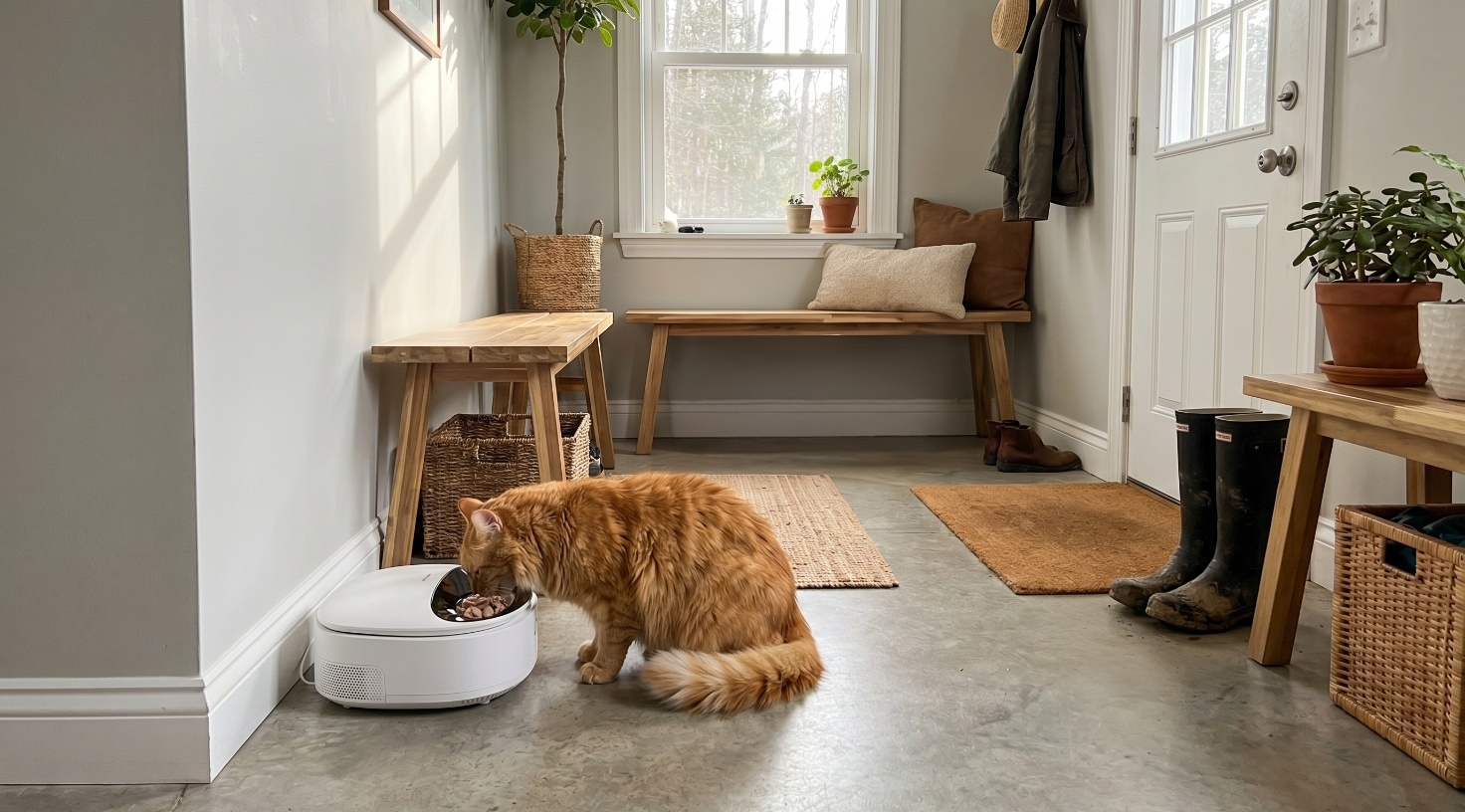
Best BPA-Free Automatic Cat Feeders: Complete Safe Material Buying Guide for Health-Conscious Owners
Best BPA-Free Automatic Cat Feeders: Complete Safe Material Buying Guide for Health-Conscious Owners
Why Feeder Materials Matter
Every automatic cat feeder your cat eats from is a material-contact surface. Kibble, wet food, and water sit in plastic hoppers, metal bowls, or ceramic dishes — and over weeks and months, microscopic amounts of the feeder material itself can migrate into your cat’s food.
This isn’t alarmism. Studies on BPA (Bisphenol A) migration from polycarbonate plastics into food have been documented for over two decades. While the pet food industry has moved toward BPA-free manufacturing, the reality is more nuanced: BPA-free does not automatically mean safe, and the replacement chemicals (BPS, BPF) may carry similar risks. Additionally, ceramic glazes can contain lead or cadmium, stainless steel comes in different grades with different safety profiles, and silicone varies wildly in quality.
This guide gives you the knowledge to evaluate any automatic cat feeder’s material safety — from the plastic auger that pushes kibble to the bowl your cat actually eats from.
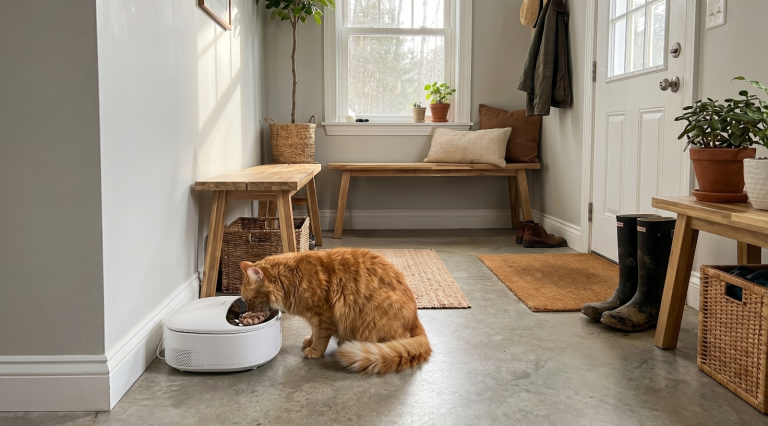
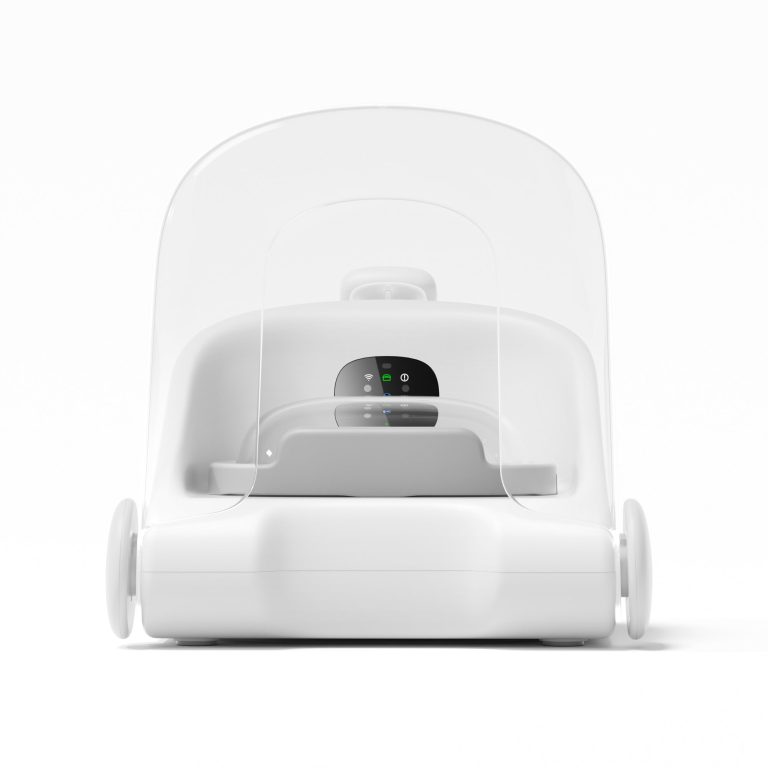
Top Pick for Overall Safety: SureFeed Microchip Feeder (ceramic bowl, BPA-free body)
Best Stainless Steel Option: PETLIBRO One Stainless (304 stainless bowl, BPA-free plastic body)
Best Ceramic Bowl Feeder: Cat Mate C50 (removable ceramic bowls, BPA-free plastic)
Best Budget Safe Option: WOPET Automatic Feeder (BPA-free materials, stainless steel bowl)
Harmful Materials to Avoid
BPA (Bisphenol A)
BPA is an industrial chemical used to make polycarbonate plastics and epoxy resins. In cat feeders, it can appear in:
– Clear plastic hoppers (polycarbonate)
– Inner linings of stainless steel bowls (rare but possible)
– Plastic internal parts (augers, gears, seals)
Health concerns: Endocrine disruption, reproductive issues, links to feline hyperthyroidism.
How to identify: Look for recycling code #7 (PC) or unclear plastic labeling. If a feeder doesn’t explicitly say “BPA-free,” assume it contains BPA.
BPS and BPF (Bisphenol S and F)
When manufacturers removed BPA, many switched to BPS or BPF as structural alternatives. Emerging research suggests these replacements may have similar endocrine-disrupting properties to BPA.
What to look for: “BPA-free” alone is not enough. Seek feeders that explicitly state “BPA-free” AND avoid mentioning bisphenol alternatives. Ideally, the brand publishes a material safety datasheet.
Phthalates
Used to soften plastics (especially PVC). Common in flexible plastic parts like silicone seals, tubing, and soft-touch coatings.
Health concerns: Reproductive toxicity, liver/kidney damage with chronic exposure.
How to identify: Avoid flexible plastics that smell strongly of “new plastic.” Look for “phthalate-free” labeling on accessories like silicone bowl liners.
Lead and Cadmium in Ceramics
Ceramic bowls are generally safe — unless the glaze contains lead or cadmium for color and shine. These heavy metals can leach into acidic or wet food over time.
Health concerns: Lead poisoning (neurological damage, digestive issues), cadmium accumulation (kidney damage).
How to identify: Only buy ceramic bowls labeled “lead-free” and “cadmium-free.” Avoid bright-colored glazes from unbranded manufacturers. Imported ceramics from unregulated supply chains carry higher risk.
What to Avoid Quick Reference
| Material | Risk | What to Look For |
|---|---|---|
| Polycarbonate plastic (#7) | High — may contain BPA | Avoid unless labeled BPA-free |
| Unlabeled plastic | Unknown — assume BPA present | Look for explicit certifications |
| Bright ceramic glaze | Medium — possible lead/cadmium | Require “lead-free” labeling |
| Soft PVC | Medium — phthalate risk | Look for “phthalate-free” |
| Generic silicone | Low-Medium — possible fillers | Choose “food-grade silicone” |
Safe Materials Breakdown
BPA-Free Plastics (PP, Tritan, ABS)
Not all plastics are created equal. The safest plastics used in quality automatic cat feeders are:
Polypropylene (PP, recycling code #5):
– Naturally BPA-free and phthalate-free
– Heat-resistant up to 130°C (266°F)
– Used in hoppers, lids, and internal mechanisms
– Found in: Cat Mate C200, WOPET feeders
Tritan (Eastman copolyester):
– BPA-free by design — molecular structure prevents bisphenol migration
– Shatter-resistant and dishwasher-safe
– Clear as glass but lighter
– Found in: Higher-end feeder hoppers
ABS (Acrylonitrile Butadiene Styrene):
– Impact-resistant and durable
– Usually BPA-free in quality brands (confirm per product)
– Used for feeder bodies and structural parts
– Found in: PETLIBRO Granary, PetSafe feeders
Best practice: When buying a BPA-free plastic feeder, verify the specific plastic type. “BPA-free plastic” is a description; PP or Tritan is a specification.
Ceramic
Ceramic bowls offer the natural advantage of being inert — provided the glaze is properly formulated and fired.
Why ceramic is safe:
– Non-porous surface resists bacterial growth
– No chemical leaching from the ceramic body itself
– Heavy (hard to tip over)
– Dishwasher-safe
– Resists scratching (unlike plastic, which harbors bacteria in scratches)
Safety checklist for ceramic feeder bowls:
– ✓ Lead-free glaze certification
– ✓ Cadmium-free glaze certification
– ✓ Food-safe (FDA or LFGB compliant)
– ✓ Glazed on all food-contact surfaces (un-glazed ceramic is porous)
– ✓ No chips or cracks (expose raw ceramic beneath glaze)
Best ceramic feeder options: Cat Mate C50 (removable ceramic bowls), SureFeed Microchip Feeder (ceramic version), PETLIBRO One (ceramic bowl option)
Stainless Steel
Stainless steel is widely considered the gold standard for pet feeding bowls. But not all stainless steel is the same.
304 Stainless Steel (18/8 or 18/10):
– Food-grade, corrosion-resistant
– Contains 18% chromium + 8-10% nickel
– Non-reactive with acidic or wet food
– No coating to chip or wear off
– Best choice for cat feeder bowls
316 Stainless Steel (marine-grade):
– Even higher corrosion resistance (added molybdenum)
– Overkill for indoor feeder use but excellent for longevity
– More expensive
What to avoid:
– 201 or 400-series stainless (less corrosion-resistant, may rust)
– Stainless bowls with plastic inner coatings (defeats the purpose)
– “Stainless steel” without grade specification (assume lower grade)
Best stainless steel feeder options: PETLIBRO One Stainless (304 bowl), PetSafe Simply Feed (stainless bowl option)
Food-Grade Silicone
Silicone is used in feeders for seals, gaskets, slow-feed mats, and bowl liners. Food-grade silicone is safe, but “silicone” without the “food-grade” label may contain fillers.
Food-grade silicone characteristics:
– Inert — no chemical migration into food
– Heat-resistant (-40°C to 220°C / -40°F to 428°F)
– Flexible and durable
– Does not support bacterial growth
– No plasticizers or BPA
Red flags:
– “Silicone” without “food-grade” or “LFGB” certification
– Strong chemical smell when new
– Oily or tacky surface feel (indicating silicone oil fillers)
– Very low price (pure silicone is not cheap)
Best practice: Look for “100% food-grade silicone” or LFGB-certified silicone in feeder components.
Material Safety Comparison Table
| Material | Safety Rating | Durability | Leaching Risk | Maintenance | Price Impact |
|---|---|---|---|---|---|
| 304 Stainless Steel | ⭐⭐⭐⭐⭐ | Excellent | None | Easy | Low-Medium |
| 316 Stainless Steel | ⭐⭐⭐⭐⭐ | Superior | None | Easy | Medium-High |
| Ceramic (lead-free) | ⭐⭐⭐⭐⭐ | Good (breakable) | None (with intact glaze) | Easy | Medium |
| Tritan Plastic | ⭐⭐⭐⭐ | Good | Very low | Easy | Low-Medium |
| PP Plastic (#5) | ⭐⭐⭐⭐ | Good | Very low | Easy | Low |
| Food-Grade Silicone | ⭐⭐⭐⭐ | Excellent | None | Easy | Low-Medium |
| ABS Plastic | ⭐⭐⭐ | Good | Low (confirmed BPA-free) | Easy | Low |
| Generic Silicone | ⭐⭐ | Varied | Unknown — filler risk | Easy | Low |
Brand-by-Brand Material Comparison
| Brand | Bowl Material | Hopper/Housing Material | Certifications | Bowl Replacement Cost | Safety Verdict |
|---|---|---|---|---|---|
| SureFeed | Ceramic | BPA-free ABS plastic | FDA food-safe ceramic | $15-20 (ceramic) | ✅ Excellent |
| PETLIBRO One Stainless | 304 Stainless | BPA-free PP plastic | Food-grade stainless | $10-15 | ✅ Excellent |
| PETLIBRO Granary | Stainless (304) | BPA-free ABS plastic | Food-safe materials | $12-18 | ✅ Excellent |
| Cat Mate C50 | Ceramic | BPA-free plastic | FDA-grade ceramic | $8-12 | ✅ Very Good |
| Cat Mate C200 | Plastic (BPA-free PP) | BPA-free PP | BPA-free certified | $5-8 | ✅ Good |
| PetSafe Simply Feed | Stainless (304) | BPA-free plastic | Food-safe | $10-15 | ✅ Very Good |
| WOPET | Stainless (304) | BPA-free ABS/PP | BPA-free certified | $8-12 | ✅ Good |
| PETKIT | Stainless (304) | BPA-free plastic | Food-grade materials | $10-15 | ✅ Very Good |
| PawSync | Stainless | ABS plastic | BPA-free claimed | $8-12 | ✅ Good (verify labeling) |
Note: Brands change materials between product lines and manufacturing batches. Always verify the specific model you’re purchasing.
Best BPA-Free Automatic Cat Feeders — Top Picks
1. SureFeed Microchip Feeder — Safest Overall
Bowl material: Ceramic (removable)
Body material: BPA-free ABS plastic
Best for: Cats on prescription diets, multi-cat households, wet food feeding
The SureFeed Microchip Feeder earns the top safety spot because its ceramic bowl is naturally inert, the housing is BPA-free ABS, and the microchip-lid mechanism keeps food covered between meals. The ceramic bowl is dishwasher-safe and resists scratches that could harbor bacteria.
Price: $150-200
Material verdict: ⭐⭐⭐⭐⭐ (Excellent)
Buy if: Safety is your #1 priority and you need multi-cat feeding with individual portion control.
2. PETLIBRO One Stainless — Best Stainless Steel
Bowl material: 304 stainless steel
Body material: BPA-free PP plastic
Best for: Owners who want the proven safety of stainless steel with smart app features
PETLIBRO’s stainless bowl is certified 304 food-grade and removable for easy cleaning. The hopper is BPA-free PP plastic. This feeder balances material safety with modern convenience: WiFi scheduling, portion control down to 1g increments, and voice recording for meal calls.
Price: $70-90
Material verdict: ⭐⭐⭐⭐⭐ (Excellent)
Buy if: You want stainless steel safety with app-controlled scheduling.
3. Cat Mate C50 — Best Ceramic Bowl Value
Bowl material: Ceramic (removable)
Body material: BPA-free plastic
Best for: Owners who prefer ceramic bowls on a budget
The Cat Mate C50 uses two removable ceramic bowls — rare at this price point. The ceramic is FDA-grade lead-free glaze. The 5-compartment design (C50) allows precise scheduling with ice packs for wet food freshness.
Price: $40-60
Material verdict: ⭐⭐⭐⭐ (Very Good)
Buy if: You want ceramic bowls at an affordable price and need wet food compatibility.
4. WOPET Automatic Feeder — Best Budget
Bowl material: 304 stainless steel
Body material: BPA-free ABS/PP plastic
Best for: Budget-conscious owners who refuse to compromise on bowl material
WOPET feeders ship with a 304 stainless steel bowl as standard, which is remarkable at the sub-$50 price point. The body is BPA-free plastic, and the feeder offers dual power (battery + AC), voice recording, and programmable portions.
Price: $30-50
Material verdict: ⭐⭐⭐⭐ (Good — excellent for the price)
Buy if: Budget is your primary constraint but bowl safety is non-negotiable.
5. PetSafe Simply Feed — Most Reliable
Bowl material: 304 stainless steel
Body material: BPA-free plastic
Best for: Owners who prioritize reliability over smart features
The PetSafe Simply Feed uses a 304 stainless steel bowl and BPA-free plastic construction. Its mechanical simplicity (rotating drum dispenser) means fewer plastic internal parts compared to auger-style feeders. PetSafe publishes material specifications clearly.
Price: $60-80
Material verdict: ⭐⭐⭐⭐ (Very Good)
Buy if: You want a proven, reliable design with stainless steel bowl.
How to Verify Your Feeder Is Truly BPA-Free
Manufacturer claims vary wildly. Here’s your verification checklist:
-
Check the fine print. If “BPA-free” only appears once in the product description, it may be marketing. Look for it in the specifications, materials section, or a dedicated safety page.
-
Look for third-party certification. Independent testing (EU LFGB, FDA compliance documentation, California Prop 65 clearance) is stronger than a brand’s own claim.
-
Check the bowl separately. Many feeders advertise BPA-free plastic but ship with bowls from a different supply chain. Verify the bowl material independently.
-
Read customer reviews for material quality. Look for reviews mentioning “chemical smell,” “tastes like plastic,” or “bowl chipped easily.”
-
Contact the manufacturer. Quality brands can tell you the specific plastic type (PP, Tritan, ABS) and stainless steel grade.
-
Test at home: New feeder should have minimal “new plastic” smell after a wash. A strong chemical odor that persists after cleaning is a red flag.
FAQ
Q: Is BPA-free plastic truly safe for my cat?
A: BPA-free is a good start, but the replacement chemicals (BPS, BPF) may have similar effects. For maximum safety, choose BPA-free feeders that also avoid bisphenol alternatives — and pair them with stainless steel or ceramic bowls.
Q: Are ceramic bowls safer than stainless steel?
A: Both are excellent when properly manufactured. Ceramic is non-reactive and non-porous but can break. Stainless steel is nearly indestructible and also non-reactive. The key is quality: lead-free ceramic glaze and 304+ stainless steel grade.
Q: How often should I replace feeder bowls?
A: Plastic bowls: every 3-6 months (scratches harbor bacteria). Stainless steel: replace if rust appears. Ceramic: replace if chipped or cracked (exposed raw material beneath glaze).
Q: Can I use the feeder’s included plastic bowl for dry food only?
A: Dry food has lower leaching risk than wet or moist food. However, plastic bowls still develop micro-scratches that trap bacteria. Stainless steel or ceramic is recommended even for dry food.
Q: What about silicone seals in feeders — are they safe?
A: Food-grade silicone is safe and inert. Non-food-grade silicone may contain fillers that can leach. Look for explicit “food-grade silicone” labeling on feeder seals and gaskets.
Q: Do stainless steel bowls affect the taste of food?
A: No — 304 stainless steel is non-reactive and does not impart any flavor. This is one reason it’s the standard for human food preparation.
Bottom line: The safest automatic cat feeder combines a BPA-free plastic body with a high-quality 304 stainless steel or lead-free ceramic bowl. At minimum, ensure the bowl material is safe — that’s where your cat’s food actually sits. For maximum safety, choose SureFeed (ceramic bowl) or PETLIBRO One Stainless (304 stainless steel), both with verified BPA-free construction throughout.