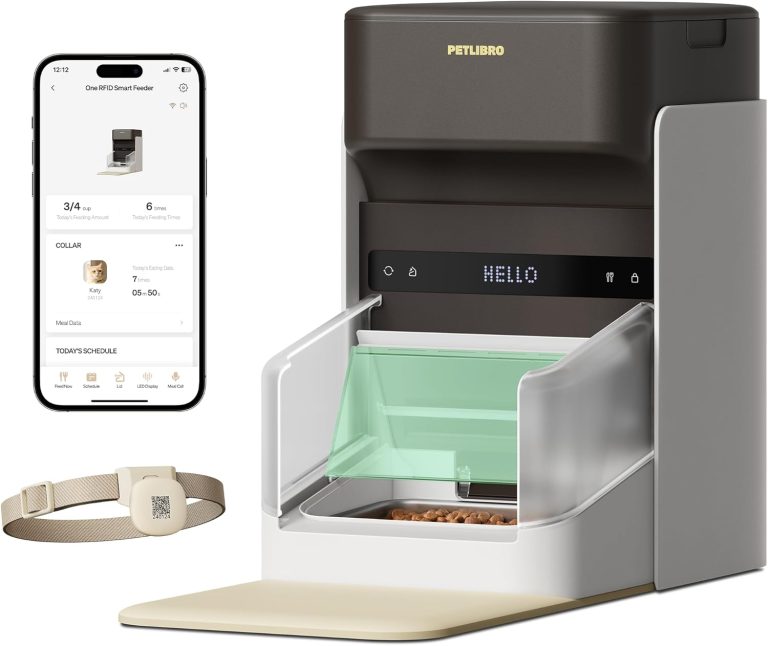
Best Automatic Cat Feeder for Cats That Hide When Food Arrives
Best Automatic Cat Feeder for Cats That Hide When Food Arrives
Introduction
Some cats run to the feeder. Others disappear the moment the feeder starts making noise.
Shy cats do not just need food. They need a setup that feels safe enough to approach. If the feeder is too loud, too tall, too bright, or too sudden, a nervous cat may wait until the room is empty before eating. That can create missed meals, stress, and food theft from bolder housemates.
This guide shows how to choose an automatic feeder for shy cats and how to set it up so a nervous cat actually uses it.
What shy cats need from a feeder
A nervous cat usually cares about four things more than brand names:
- low noise
- low visual pressure
- predictable movement
- a safe feeding location
If the feeder scares the cat once, the cat may remember that reaction for a long time. That is why the best feeder for shy cats is not always the one with the most features. It is the one the cat will tolerate every day.
Quick comparison table
| Feeder trait | Why it matters for shy cats |
|---|---|
| Quiet motor | Less startling during meal time |
| Low-profile bowl | Easier to approach without feeling trapped |
| Slow lid or soft motion | Reduces fear around moving parts |
| Stable base | Feels safer than a feeder that shifts |
| Voice recording | Helps the cat associate the feeder with something familiar |
| Simple design | Less visual clutter and less uncertainty |
Best feeder traits for nervous cats
1. Quiet operation
A loud motor can be enough to ruin a feeding routine.
If you have a shy cat, look for a feeder known for quiet dispensing and gentle opening or rotation. Even a small reduction in sound can change whether the cat approaches immediately or waits in the hallway.
2. Low bowl profile
High bowls or deep, boxy designs can make a timid cat feel boxed in. A lower entry point is easier to approach and easier to trust.
3. Predictable feeding motion
Cats like patterns, but shy cats like patterns they can learn.
A feeder with a consistent sound and motion pattern is easier to acclimate to than one that has random noises, flashing lights, or app notifications every time it runs.
4. A placement-friendly footprint
Some cats feel safer eating with their back to a wall and their front facing the room. Others prefer a corner where they can watch the doorway.
The feeder should be small enough to place where the cat already feels comfortable.
How to set up the feeder so a shy cat accepts it
Step 1: Put the feeder in a calm location
Do not start in a noisy kitchen traffic lane.
Pick a quiet area where the cat already spends time. A corner with one open sightline often works well because it gives the cat some control over what it can see.
Step 2: Leave it turned off at first
Let the cat inspect the feeder as an object before it becomes a food event.
Put treats near it, not inside it, and let the cat decide how close to get.
Step 3: Use the same sound every time
If the feeder has a voice recording, use a calm, short phrase. Keep it consistent.
Do not use a dramatic phrase or a loud voice. The goal is familiarity, not excitement.
Step 4: Start with the feeder dispensing when the cat is already nearby
If the cat sees the feeder work from a safe distance and then receives food, the experience becomes less mysterious.
Step 5: Build toward unattended feeding slowly
Once the cat eats calmly near the feeder, move to scheduled feeding. Start with times when the home is quiet and the cat is relaxed.
What to avoid
Do not place the feeder next to the washing machine, dishwasher, or a loud hallway.
Do not use a feeder with a sudden lid pop or a rattly chute if the cat is already jumpy.
Do not make the feeder look like a trap. If the opening is dark, narrow, and noisy, a shy cat may decide the bowl is not worth it.
Do not crowd the feeder with other bowls, litter boxes, or pet traffic.
Best use cases for shy cats
1. Cats that hide when people enter the room
These cats usually need a feeder with low noise and a stable routine. A feeder that dispenses quietly at predictable times is often enough.
2. Cats that eat only when the house is quiet
These cats benefit from a feeder that can run in a calm corner and keep meals consistent.
3. Cats that are scared by bigger pets
A feeder can help create a private eating zone. In multi-pet homes, that privacy matters a lot.
4. Rescue cats or newly adopted cats
These cats often need a longer acclimation period. The feeder should be introduced slowly, like any other new object in the room.
Product selection logic
When shopping, prioritize these features in order:
- Quiet dispensing
- Stable base
- Low bowl entry
- Simple, predictable operation
- Optional voice recording
- App features only if they do not add confusion
A feeder can be smart without being stressful. But for shy cats, simplicity usually wins.
Recommended feeder style by cat type
Very nervous cat
Choose the quietest feeder with the simplest motion and the least visual drama.
Slightly cautious cat
A feeder with a gentle motor, voice message, and stable bowl works well.
Shy cat in a multi-cat home
Prioritize privacy and access control. The feeder should keep bolder cats away and give the shy cat time to eat in peace.
Cat that hides from sudden sound
Avoid any feeder with loud clacks or abrupt lid movement. The sound profile matters more than app polish.
Training plan for the first week
Day 1 and 2
Keep the feeder off. Let the cat investigate.
Day 3
Place treats near the feeder.
Day 4
Run the feeder once while the cat is at a comfortable distance.
Day 5
Feed a small meal while the room stays quiet.
Day 6 and 7
Repeat the same routine at the same time each day.
The goal is not to force confidence. The goal is to make the feeder boring.
FAQ
Why does my cat wait until I leave before eating?
The cat does not trust the environment yet. The feeder may be fine. The placement or sound may be the issue.
Should I choose a feeder with a camera for a shy cat?
Only if the camera features do not add noise or motion. For many shy cats, simpler is better.
Will voice recording help?
Sometimes. A short, calm recording can help a cat recognize the feeding routine. Keep it gentle and consistent.
What if my cat still will not approach?
Move the feeder farther from traffic, reduce the sound exposure, and restart the introduction process. Some cats need more time than others.
Verdict
The best automatic cat feeder for shy cats is quiet, low-profile, stable, and predictable.
A nervous cat does not need a flashy feeder. It needs a feeder that blends into the room and does not turn mealtime into an event. If you choose the right model and introduce it slowly, most shy cats will learn to trust it.