Best Smart Cat Feeders with Weight Tracking and Eating Pattern Monitoring 2026: Early Health Detection Through Data
Introduction
Most automatic feeders solve one problem: dispensing food on a schedule. But a growing number of cat owners want more. They want to know if their cat is eating normally, losing weight, or changing their eating patterns. Those changes are often the first sign of illness.
Weight loss in cats is one of the earliest indicators of hyperthyroidism, kidney disease, diabetes, and dental problems. Reduced appetite can signal gastrointestinal issues, infections, or stress. By the time most owners notice their cat has lost weight, the condition has been progressing for weeks.
Smart feeders with weight tracking and eating pattern monitoring bridge that gap. They collect data on every meal: how much your cat ate, when they ate it, how often they visited the feeder, and how their weight is trending over time. That data gives you something concrete to bring to your vet.
This guide covers feeders that offer some form of health monitoring: built-in scales, app-based consumption tracking, camera-based behavior monitoring, and companion smart scales that pair with standard feeders.
What to Look for in a Health-Monitoring Feeder
Not all “smart” feeders track the same data. Here is what separates a health-monitoring feeder from a basic smart feeder.
Weight tracking. Does the feeder include a built-in scale, or does it pair with a separate smart scale? Built-in scales measure your cat’s weight when they step on the feeder platform. Separate scales require your cat to stand on them independently. Built-in is more reliable because your cat visits the feeder daily.
Meal consumption tracking. The feeder logs how much food was dispensed and how much was eaten. Some track visit duration and number of visits per day. This data reveals appetite changes before weight changes appear.
Pattern recognition over time. The app tracks trends, not single meals. A cat that eats 80% of their food one day and 40% the next might be having an off day. A cat trending from 90% to 60% over two weeks needs a vet visit.
Multi-cat identification. If you have multiple cats sharing a feeder, the feeder needs RFID or microchip recognition to log per-cat data. Without it, all eating data is aggregated and useless for health monitoring.
Data export. Some apps let you export feeding logs and weight trends to share with your vet. This is valuable for managing chronic conditions.
The Best Feeders and Scales for Health Monitoring
1. PETLIBRO DockStream — Best Integrated Camera and Scale Feeder
Price: $129.99 Type: WiFi camera feeder with companion smart scale Best for: Owners who want both visual monitoring and weight tracking
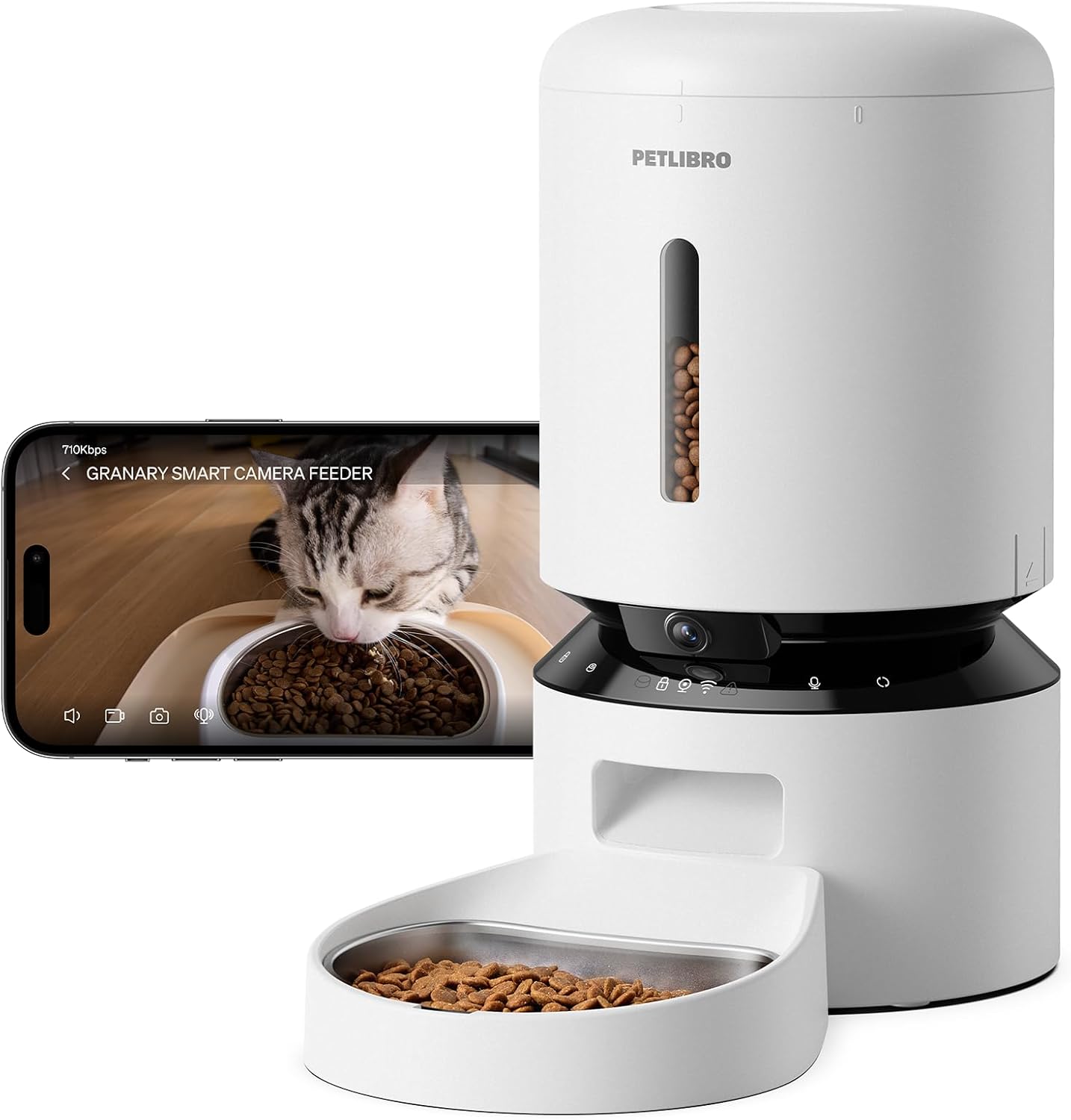
The PETLIBRO DockStream is the closest thing to an all-in-one health monitoring feeder. It combines a 1080P camera feeder with a companion smart scale that your cat stands on when they approach the bowl. The app logs every weigh-in and links it to meal times.
How the weight tracking works. The DockStream feeder sits on a separate scale platform. When your cat steps onto the platform to eat, the scale records their weight. The app correlates the weigh-in with the meal time and portion dispensed. Over days and weeks, you see a weight trend line.
Camera monitoring. The 1080P camera streams live video with night vision. You can watch your cat eat remotely, check if they are finishing their meals, and spot changes in eating behavior. Motion alerts notify you when your cat approaches the feeder.
App features. The PETLIBRO app stores weight history, feeding logs, and video clips. You can view a graph of your cat’s weight over time and compare it against their food consumption. The app supports exporting data, but you need to screenshot the graphs rather than downloading a CSV.
Meal programming. Up to 4 meals per day, 1-8 portions per meal. The feeder holds 3L of dry kibble. It runs on 2.4G WiFi and accepts D-cell batteries for power backup.
Limitations. The scale platform is separate from the feeder, meaning it takes up more counter space. The scale works best for single-cat households. Multi-cat households get aggregated weight data that is harder to attribute to a specific cat. The scale needs to be calibrated periodically.
Who it is for: Single-cat owners who want the most complete picture of their cat’s eating habits. The combination of video, weight tracking, and consumption data gives you early warning of health changes.
2. PETKIT Fresh Element Solo — Best Camera Feeder with Consumption Monitoring
Price: $99.99 Type: 1080P camera feeder with app-based consumption tracking Best for: Owners focused on meal consumption patterns rather than weight
The PETKIT Fresh Element Solo does not include a built-in scale, but it tracks meal consumption through the app. You log how much food you put in, the feeder reports how much was dispensed, and you can note how much was left at the next meal.
How consumption tracking works. The app records every scheduled feeding and lets you mark whether your cat finished the meal. Over time, you build a record of your cat’s eating patterns: typical portion completion, skipped meals, and changes in appetite. It relies on your input to track leftovers, which means you need to check the bowl before each refill.
Camera quality. The 1080P stream is clear enough to see whether your cat is eating or just sniffing and walking away. Two-way audio lets you call your cat to the feeder if they are skipping meals. Night vision works well in low light.
App reliability. The PETKIT app is consistently rated as one of the better smart feeder apps. Notifications push through reliably on iOS and Android. The feeding schedule is easy to adjust remotely.
Limitations. No weight tracking. The Solo tells you when and how much your cat ate, but not whether they are gaining or losing weight. It is also a single-cat feeder with no cat recognition, so multi-cat data is meaningless. The plastic hopper scratches over time.
Who it is for: Owners who want to track appetite changes and eating patterns at a lower price point. Pair it with a separate pet scale for weekly weigh-ins.
3. Whisker Feeder-Robot — Best Multi-Cat Health Monitoring
Price: $249.00 Type: RFID-enabled smart feeder with consumption tracking Best for: Multi-cat households that need per-cat eating data
Whisker is the company behind the Litter-Robot, and their Feeder-Robot integrates with the same Whisker app used by the litter box. The Feeder-Robot is an RFID-enabled smart feeder that tracks per-cat consumption and integrates with the Litter-Robot’s weight data for a complete health picture.
How health monitoring works. Each cat wears an RFID tag on their collar. The Feeder-Robot logs which cat eats, when, and how much. If you also own a Litter-Robot 4 (which includes a built-in scale), the app combines feeding data with weight data from litter box visits. You see weight trends correlated with food consumption.
Per-cat data. In a multi-cat household, this is the only feeder that gives you per-cat consumption without buying separate feeders for each cat. The RFID tags are reliable and the feeder holds up to 10 registered cats.
SmartFeeder features. The Feeder-Robot holds about 3L of dry kibble. It dispenses up to 6 meals per day with portion control. The app lets you set per-cat feeding schedules. It works on 2.4G WiFi and has a battery backup option.
App integration. The Whisker app shows individual cat profiles with feeding history, weight trends (from Litter-Robot), and litter box usage. The combination is powerful for early illness detection: a cat that stops using the litter box and stops eating on the same day has a problem worth investigating.
Limitations. The Feeder-Robot requires the Litter-Robot for weight tracking. Without it, you get consumption data only. At $249, it is the most expensive feeder on this list. Adding a Litter-Robot pushes the total investment over $1,000. The feeder is dry-food only.
Who it is for: Existing Litter-Robot owners who want the full Whisker ecosystem. The combined data set is the most comprehensive health monitoring available for multi-cat households.
4. Companion Smart Scale + Standard Feeder — Best Modular Setup
Price: $50-80 (scale) + $50-150 (feeder) Type: Separate smart scale paired with any feeder Best for: Owners who already have a feeder they like
You do not need to buy a new feeder to start tracking your cat’s weight. A companion smart scale works alongside any existing feeder. Your cat steps on the scale during meal time, and the app logs the weight.
Top smart scales for cats. – PawSense Smart Scale ($69.99) — Connects to app, tracks weight trends, supports multiple cats via profile switching – Petivity Smart Scale ($79.99) — Designed for cats, tracks weight and stepping patterns, pairs with most feeders – Leptra Pet Scale ($49.99) — Budget option, tracks weight only, basic app
How it works. Place the scale in front of or under your cat’s feeder. Most cats step onto the scale naturally while approaching the bowl. The scale records the weight and sends it to the app. Over time, the app builds a weight trend graph.
Pros. Works with any feeder. Lower cost than an integrated system. You can keep using a feeder your cat already knows. Scales are portable and easy to clean.
Cons. Requires your cat to step on the scale consistently. Cats that jump over the scale or approach the feeder from the side will not get weighed. Multi-cat households need profile switching, which requires you to confirm which cat was weighed.
Who it is for: Owners who want weight tracking without replacing their current feeder. The modular approach gives you flexibility to upgrade either component independently.
5. SureFeed Microchip Feeder + Manual Scale — Best for Prescription Diet Monitoring
Price: $199.99 (feeder) + $30 (manual scale) Type: Microchip feeder paired with weekly manual weigh-ins Best for: Cats on prescription diets where weight is a treatment marker
Cats on prescription diets for kidney disease, hyperthyroidism, or diabetes need regular weight monitoring as part of their treatment plan. The SureFeed Microchip Feeder ensures only the right cat gets the right food. Pair it with a manual kitchen scale for weekly weight checks.
Why this combination works. The SureFeed guarantees dietary compliance. No food stealing, no swapped bowls. Weekly weigh-ins on a simple digital scale give you the data your vet needs to adjust medication dosages and diet plans. The feeding logs from the SureFeed (it tracks when the lid opened) give you meal timing data.
Manual weigh-in process. Buy a digital kitchen scale that reads in grams. Weigh your cat weekly at the same time of day. Log the weight in a spreadsheet or the app of your choice. Compare against the previous week’s weight. A 1-2% change per week warrants a vet call.
Limitations. Manual, not automatic. Requires you to remember weekly weigh-ins. The SureFeed does not have an app for health data, so you need to maintain your own records. But for cats with serious medical conditions, the manual approach is more reliable than a smart scale that your cat might not step on.
Who it is for: Owners managing a cat with a diagnosed medical condition that requires dietary compliance AND weight monitoring. The combination of feeding control and manual data collection gives your vet the most useful information.
Comparison Table
| Setup | Price | Weight Tracking | Consumption Tracking | Cat Recognition | Best For |
|---|---|---|---|---|---|
| PETLIBRO DockStream | $129.99 | Yes (scale) | Yes (app) | No | Single-cat video + weight |
| PETKIT Fresh Element Solo | $99.99 | No | Partial (manual) | No | Appetite tracking on a budget |
| Whisker Feeder-Robot + Litter-Robot | $249+$699 | Yes (LR4) | Yes (RFID) | Yes (RFID) | Multi-cat ecosystem |
| Smart scale + existing feeder | $50-80 | Yes (scale) | Varies | No | Modular flexibility |
| SureFeed + manual scale | $199.99+$30 | Manual | Manual | Yes (microchip) | Prescription diet cats |
Interpreting the Data: When to Call Your Vet
Tracking data is only useful if you know what to look for. Here are the specific thresholds that warrant a vet visit.
Weight change. A 5% weight loss over 1-2 months is significant. For a 10-pound cat, that is half a pound. Track weekly and graph the trend. Gradual weight loss is easy to miss without data.
Appetite decline. If your cat eats less than 75% of their food for three consecutive days, monitor closely. If it continues for five days or is accompanied by lethargy, vomiting, or diarrhea, call your vet.
Increased appetite with weight loss. This combination is a classic sign of hyperthyroidism or diabetes. If your cat is eating more but losing weight, schedule a vet appointment within a week.
Erratic eating patterns. A cat that suddenly changes from two consistent meals per day to multiple small visits with food left uneaten may have dental pain or gastrointestinal issues.
No data is data. If your cat stops visiting the feeder entirely for 24 hours, that is an emergency for cats, especially if they are overweight. Hepatic lipidosis (fatty liver disease) can develop in as little as 48 hours of not eating.
FAQ
Can I track my cat’s weight without a smart feeder? Yes. A simple digital kitchen scale costs $20-30. Weigh your cat weekly and log the numbers in a spreadsheet. This gives you the same trend data as a smart scale, with manual effort.
Do smart feeders work for multi-cat weight tracking? Only the Whisker Feeder-Robot + Litter-Robot combination gives reliable per-cat weight data for multi-cat households. Other setups require single-cat households or manual identification.
How accurate are feeder-integrated scales? Most are within 1-2% accuracy, which is sufficient for trend monitoring. They are not medical-grade but will reliably detect a 5% weight change.
Can I share feeder data with my vet? Most apps let you take screenshots of the data graphs. Some, like the Whisker app, allow data exports. Check your vet’s preference. Many vets appreciate any data you bring, even as screenshots.
Do these feeders work for wet food? The PETKIT Fresh Element Solo and PETLIBRO DockStream are dry-food only. SureFeed is wet-food compatible. The Whisker Feeder-Robot is dry-food only. If wet food is part of your diet plan, the SureFeed or a manual feeding approach is better.
Verdict
Weight tracking and eating pattern monitoring are not gimmicks. They give you early warning of health problems that are easy to miss until they become serious.
For single-cat owners who want the full picture: Buy the PETLIBRO DockStream. The combination of camera monitoring and weight tracking gives you the most data for the price.
For existing Litter-Robot owners: Add the Whisker Feeder-Robot. The integrated health dashboard across feeding and litter box data is unmatched.
For owners on a budget: Buy a PETKIT Fresh Element Solo and a $30 kitchen scale. The Solo tracks appetite changes through its app, and the manual scale gives you weekly weight data. Total cost: about $130.
For cats with diagnosed medical conditions: Use the SureFeed Microchip Feeder for dietary compliance and track weight manually. The feeding control matters more than automated data collection.
Start with one data point: weekly weight. Add consumption tracking when you are ready. The data accumulates fast, and within a month you will have a health baseline that makes vet visits more productive.
BestCatFeeder.com is reader-supported. When you buy through links on our site, we may earn an affiliate commission. As an Amazon Associate, we earn from qualifying purchases.