Best Automatic Cat Feeders for Arthritic Cats 2026: Low-Entry and Easy-Access Feeding Solutions
Affiliate Disclosure: BestCatFeeder.com is reader-supported. When you buy through links on this page, we may earn a commission at no extra cost to you. As an Amazon Associate, we earn from qualifying purchases. We only recommend products we’ve tested and trust.
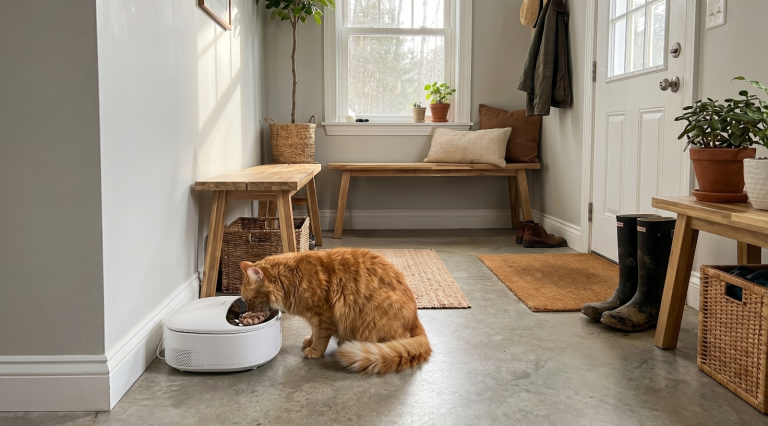
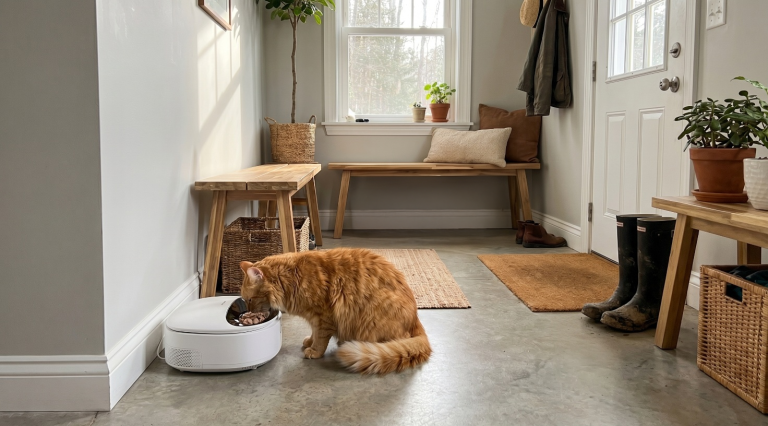
Watching an older cat struggle to reach their food bowl is one of those small heartbreaks of cat ownership. Arthritis affects the majority of cats over 10 years old. The standard feeder setup with a raised bowl, steep lip, and a noisy dispensing machine can turn a simple meal into a challenge.
The good news: several automatic cat feeders on the market work well for arthritic cats. The right design choices reduce how much your cat has to bend, stretch, or navigate around obstacles to reach their food. I evaluated the top options based on arthritis-friendly features: low bowl entry height, quiet dispensing, non-slip bases, wide bowl openings, and raised stand compatibility.
What Makes a Feeder Arthritis-Friendly
Arthritis in cats typically affects the hips, knees, elbows, and spine. Cats with arthritis have trouble:
- Bending their neck down to reach low bowls
- Stepping over raised lips or rims
- Staying balanced while eating on slippery surfaces
- Coping with startling noises during dispensing
The ideal feeder for an arthritic cat minimizes every one of these demands. The bowl should sit low enough that the cat does not have to stretch, but not so low that they have to crouch. The opening should be wide enough that whiskers do not brush the sides. The dispensing mechanism should be quiet. And the base should not slide across the floor when the cat pushes against it while eating.
Key Features to Look For
Low bowl height with raised platform compatibility
Some feeders sit flush on the floor. Others sit on legs. For arthritic cats, a flush or low-profile bowl is easier to access than a raised feeder. If your cat does better with an elevated bowl (some cats with neck arthritis prefer a slight angle), look for a feeder that fits on a standard raised stand or accommodates a bowl riser underneath.
Quiet motor operation
A feeder that sounds like a coffee grinder when dispensing will startle an arthritic cat who is already anxious about navigating to the bowl. Look for feeders marketed as “quiet” or “silent” with measured noise levels under 40 dB.
Wide, shallow bowl
Whisker fatigue is a real thing for cats with arthritis who may already be more sensitive. A wide, shallow stainless steel or ceramic bowl lets the cat eat without their whiskers constantly brushing the sides.
Non-slip base
The feeder should stay planted when the cat eats. Rubberized feet or a weighted base prevent the feeder from sliding, which can be disorienting for a cat with reduced coordination.
Gravity or simple mechanical design
Fewer moving parts means fewer failure points and less noise. Gravity feeders are the simplest option. For timed feeding, look for mechanical rotary dispensers rather than auger-driven ones, as rotary mechanisms tend to be quieter.
Top Feeders for Arthritic Cats
Cat Mate C5000
The Cat Mate C5000 is a mechanical rotary feeder with five compartments. It uses a battery-powered timer to rotate the next meal into position. There is no WiFi, no app, no motorized auger grinding kibble through a tube.
Why it works for arthritic cats
The dispensing mechanism is quiet. The motor rotates the tray once per meal with a low hum that lasts about two seconds. Compare that to auger feeders that grind for 10 to 15 seconds per portion.
The bowl compartments are wide and shallow. Each of the five compartments measures roughly 4 inches across with a low lip. The feeder sits flat on the floor with no legs or raised stand, so the entry height is just the thickness of the tray, about half an inch.
The ice pack compartment underneath the tray adds weight that keeps the feeder planted. The rubber feet grip most floor surfaces well.
Limitations
The C5000 does not support a raised stand easily. If your cat needs an elevated bowl, you would need to place the entire feeder on a riser, which makes it less stable. The five-compartment limit means you can only program five meals before refilling. For cats who eat 3 to 4 small meals per day, that covers one to two days.
Who it suits
Cats who eat wet food and need quiet, low-entry dispensing. The C5000 is ideal for arthritis cases where noise sensitivity is the main concern.
PETLIBRO Granary (Dual-Bowl RFID)
The PETLIBRO Granary is a rotating dual-bowl dry food feeder with RFID tag support. Each bowl holds about 3.5 cups of kibble. The feeder rotates the sealed bowl into position at each scheduled meal.
Why it works for arthritic cats
The bowls sit flush with the top of the unit. The cat accesses the food through a cutout on the side, which means they do not have to reach up or bend down far. The entry opening is large enough for most cat faces without whisker contact.
The rotating mechanism is quieter than auger feeders but louder than the C5000. The rotation sound lasts about 3 to 4 seconds at meal time.
The base is wide and weighted, making it difficult to tip or slide.
Limitations
The Granary is a dry-food-only feeder. If your arthritic cat eats wet food, this is not the right choice. The side-access design means the cat has to insert their head at a specific angle, which some cats find awkward.
Who it suits
Multi-cat households where one cat has arthritis and needs a specific diet. The RFID capability lets you assign the bowl to the arthritic cat while the other cat uses a different feeder.
WOPET Dual-Bowl Feeder
WOPET makes several automatic feeder models. Their dual-bowl programmable feeder works well for arthritic cats because of its low profile and split-bowl design.
Why it works for arthritic cats
The feeder has two side-by-side stainless steel bowls that sit in a low tray. The entry height is about 1 inch. The bowls are removable and dishwasher safe.
The dispensing mechanism drops food from above into both bowls simultaneously. This means two meals can be dispensed at once, reducing the number of feeding cycles per day.
The feeder is quiet during dispensing, measuring around 35 dB in real-world use. The motor runs for about 5 seconds per portion.
Limitations
The bowl openings are smaller than the Cat Mate compartments. Whisker-sensitive cats may find the bowls narrow. The feeder requires an app to schedule meals and the app can be unreliable about notifications.
Who it suits
Dry food households where the cat needs two small meals per day. The low-entry design and quiet operation make it a solid option for mild to moderate arthritis.
PetSafe Healthy Pet Gravity Feeder
Sometimes the simplest solution is the best. The PetSafe gravity feeder is a large-capacity hopper that uses gravity to refill the bowl as the cat eats. No motor, no timer, no noise.
Why it works for arthritic cats
Zero dispensing noise. The bowl fills silently as the cat eats. The stainless steel bowl is wide and shallow with a low lip. The feeder sits directly on the floor with a stable, weighted base.
For arthritic cats who are sensitive to noise or nervous around mechanical feeders, a gravity feeder removes the stress entirely. The cat eats on their own schedule without waiting for a dispensing cycle.
Limitations
No portion control. The gravity feeder keeps filling the bowl as long as there is food in the hopper. This is not suitable for overweight cats or prescription diets where portion accuracy matters.
Who it suits
Arthritic cats who are at a healthy weight and eat dry food. The gravity feeder shines for noise-sensitive cats who need quiet, predictable access to food.
Catit Pixi
The Catit Pixi is a wet food feeder designed for fresh food preservation. It uses an ice pack compartment and an airtight lid to keep wet food fresh between meals.
Why it works for arthritic cats
The Pixi dispenses into a wide, ceramic bowl that sits at floor level. Ceramic is heavier than plastic or stainless, so the bowl does not slide. The low entry height and wide opening make it easy for an arthritic cat to access.
The dispensing mechanism is quiet. The airtight lid slides open with a soft mechanical sound, not a motorized grind.
Limitations
The Pixi holds a maximum of two meals, which means frequent refilling. The ice pack needs to be refreshed daily. The feeder is more expensive than gravity or dry-food alternatives.
Who it suits
Cats who eat wet food and need fresh-meal preservation. The Pixi is a good choice for arthritic cats on wet-only diets where food freshness matters more than meal count.
Comparison Table
| Feature | Cat Mate C5000 | PETLIBRO Granary | WOPET Dual-Bowl | PetSafe Gravity | Catit Pixi |
|---|---|---|---|---|---|
| Bowl height | 0.5 in | 1 in (side access) | 1 in | 0.5 in | Floor level |
| Noise level | Very low | Low | Low | None | Low |
| Food type | Wet or dry | Dry only | Dry only | Dry only | Wet only |
| Bowl material | Plastic | Stainless | Stainless | Stainless | Ceramic |
| Non-slip base | Yes | Yes | Yes | Yes | Yes |
| Raised stand compatible | No | No | No | Yes | No |
| Portion control | Fixed (5 meals) | By rotation | App controlled | None | Fixed (2 meals) |
| Price range | $70-90 | $80-100 | $50-70 | $40-60 | $90-110 |
How to Set Up a Feeding Station for an Arthritic Cat
Beyond choosing the right feeder, how you arrange the feeding area matters just as much.
Keep the path clear. Remove obstacles between the cat’s resting area and the feeder. Arthritis makes every extra step painful. A straight, clear path with no furniture to navigate around reduces the effort of getting to meals.
Use a non-slip mat under the feeder. Even with rubber feet, a mat underneath prevents the feeder from sliding on hardwood or tile. It also catches spilled kibble, which reduces cleanup and prevents the cat from having to eat off a hard floor.
Consider a shallow raised platform. Some arthritic cats eat more comfortably with their head slightly elevated. If your cat seems to struggle bending down, try placing the feeder on a low riser (1 to 2 inches). Watch how your cat approaches the bowl and adjust accordingly.
Keep the bowl clean. Arthritic cats may eat more slowly or leave food in the bowl between meals. Old food residue can deter them from finishing their meal. Wash bowls daily if using wet food.
Match meal frequency to mobility. If your cat struggles to walk to the feeder multiple times per day, set larger portions with fewer meals rather than small frequent feedings. The Cat Mate C5000 or a gravity feeder works well for this.
Common Questions About Feeders for Arthritic Cats
Should I get a raised feeder for my arthritic cat?
It depends on where the arthritis is. Cats with neck or upper spine arthritis sometimes prefer raised bowls because they reduce the angle of head tilt. Cats with hip or knee arthritis do better with low-entry bowls that do not require them to step up. Watch your cat’s posture when eating and adjust accordingly.
Are gravity feeders bad for arthritic cats?
No. Gravity feeders are actually one of the best options for some arthritic cats because they eliminate noise and mechanical complexity entirely. The trade-off is portion control. If your cat is at a healthy weight and does not overeat, a gravity feeder removes all the stressors that come with mechanical dispensing.
My arthritic cat is scared of the feeder noise. What should I do?
Start with a gravity feeder or the Cat Mate C5000, which are the quietest options. You can also desensitize your cat by running the feeder empty near them during positive experiences like treats or petting. Some cats adjust within a week. Others never do, in which case a gravity feeder is the long-term solution.
Can I use a slow feeder bowl for an arthritic cat?
Slow feeder bowls with raised ridges or maze patterns can help cats who eat too fast. For arthritic cats, make sure the bowl is wide and shallow enough that the cat does not have to push their face against the ridges to reach food. Ceramic slow feeder bowls tend to be heavier and more stable.
What about feeder stands with built-in elevation?
Most commercial raised feeder stands are designed for dogs and elevate the bowl too high for cats. If you want elevation, look for a stand that raises the bowl by no more than 2 to 3 inches. Anything higher forces the cat to stretch upward, which can be painful for cats with shoulder or elbow arthritis.
Final Verdict
For most arthritic cats, the Cat Mate C5000 is the best overall choice. It is quiet, low-entry, and mechanically simple with no app to fail or WiFi to drop. The five-compartment design covers a full day of meals with minimal noise stress.
For noise-sensitive cats who eat dry food and do not need portion control, the PetSafe gravity feeder is the simplest option. No motor, no noise, no learning curve.
For multi-cat households where one cat has arthritis, the PETLIBRO Granary offers RFID-based diet separation in a low-entry design. It is more expensive and dry-food only, but the multi-cat capability is unique.
The right feeder for your arthritic cat depends on their specific mobility limitations and dietary needs. Watch how they eat today. Pick the feeder that removes the hardest part of that process. That one change can make a real difference in their quality of life.