Best Automatic Cat Feeder for Cats with Kidney Disease (CKD) 2026 — Small Frequent Meals for Renal Health
Best Automatic Cat Feeder for Cats with Kidney Disease (CKD) 2026 — Small Frequent Meals for Renal Health
If your cat has been diagnosed with Chronic Kidney Disease (CKD), you already know how critical diet and feeding schedule become. CKD affects an estimated 30–40% of cats over 10 years old, and managing it requires a shift to small, frequent meals with precise portion control, increased moisture intake, and low-stress feeding routines.
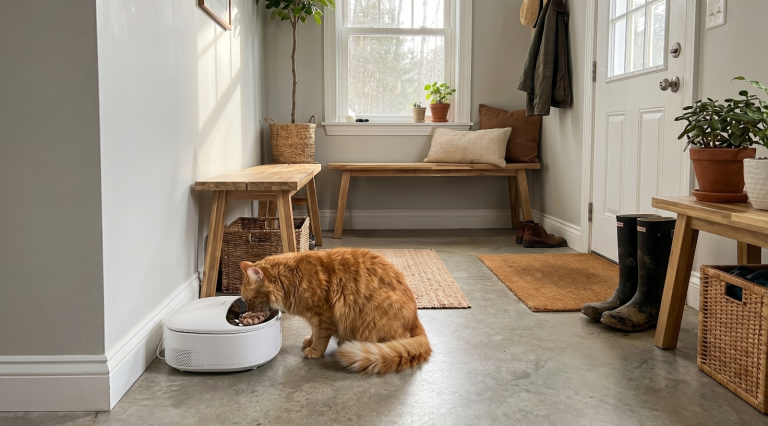
An automatic feeder designed for CKD cats can make this manageable. The right feeder lets you program 4–6 small meals a day (mimicking what your vet recommends), handle wet food safely, and keep the process quiet enough that a sick or sensitive cat won’t be spooked at mealtime.
This guide covers the best automatic cat feeders for kidney disease in 2026 — models that help you deliver prescription renal diets, maintain hydration through wet food, and stick to a consistent feeding schedule without constant manual effort.
Why Feeding Frequency Matters for CKD Cats
Veterinarians managing feline CKD typically recommend shifting from one or two large meals to three to six smaller meals spread across the day. Here is why that matters:
Stable nutrient absorption. Smaller meals put less strain on the kidneys at any one time. Spreading food intake across the day helps maintain steadier blood values compared to large, infrequent feedings.
Appetite preservation. CKD cats often experience nausea and reduced appetite. Offering small amounts of food multiple times a day is more appealing than presenting a full bowl that feels overwhelming.
Hydration support. Wet food contains 70–80% moisture compared to 10% in dry kibble. A feeder compatible with wet food becomes a hydration delivery system that helps flush toxins through the kidneys.
Stress reduction. A consistent, predictable feeding schedule reduces cortisol spikes. Sick cats thrive on routine, and an automatic feeder delivers that routine even if you are at work or asleep.
What to Look for in a CKD Cat Feeder
Not every automatic feeder is suitable for a cat with kidney disease. Here are the features that matter most when you are shopping for a CKD-specific feeder.
1. Multi-Meal Programming (4–6 Meals per Day)
The single most important feature. You need a feeder capable of dividing your cat’s daily food allowance into at least 4–5 servings. Some basic feeders only handle 1–3 meals, which is insufficient for the frequent small meal protocol CKD requires.
2. Wet Food Compatibility
Most CKD prescription diets — Hill’s Prescription Diet k/d, Royal Canin Renal Support, Purina Pro Plan Veterinary Diets NF — come in wet formulations. You need a feeder that can handle wet food without spoilage. Look for ice packs or active cooling if you plan to leave wet food for more than a few hours.
3. Portion Precision (1g Accuracy)
CKD management often requires precise caloric control. Feeders that dispense in roughly measured cup increments may over- or under-feed. Models with programmable weight-based or timed portions with tight tolerances give you better control.
4. Quiet Operation
Sick cats are more sensitive to noise. A loud auger motor or kibble dispense mechanism can startle a CKD cat and make them avoid the feeder altogether. Look for units rated below 35 dB for motor operation.
5. Stainless Steel or Ceramic Bowls
Plastic bowls can harbor bacteria and may cause chin acne. Stainless steel or ceramic bowls are easier to sterilize and safer for immune-compromised CKD cats. Check that any cooling bowl insert is also food-grade and easy to clean.
6. Individual Access (for Multi-Cat Homes)
If you have multiple cats but only one with CKD, a microchip or RFID feeder is essential. It lets the CKD cat access its prescription food while keeping other cats out, preventing food stealing and ensuring your CKD cat gets exactly the diet it needs.
Top 5 Automatic Cat Feeders for CKD Cats in 2026
1. Cat Mate C5000 — Best for Wet Food Multi-Meal CKD Feeding
The Cat Mate C5000 is the top recommendation for CKD cats that eat wet food. It features five separate compartments that you can fill with individual wet food portions, each kept fresh with the included gel ice packs. You can program up to five meals per day, matching the frequent feeding schedule CKD cats need.
Why it fits CKD cats:
- Five separate meal compartments — ideal for splitting daily renal diet portions
- Ice pack cooling keeps wet food fresh for up to 12 hours
- Quiet motor operation (under 30 dB)
- Removable stainless steel bowls for easy cleaning
- Affordable price point compared to high-end electronic feeders
Trade-offs: Requires manual compartment rotation — you cannot dial in exact gram portions. Ice pack effectiveness depends on ambient temperature. Not suitable for dry food only.
2. PETLIBRO Polar — Active Cooling for Wet Renal Diets
The PETLIBRO Polar is one of the few feeders on the market with built-in active cooling, making it ideal for CKD cats on wet prescription diets. It keeps food at 33–41°F, which means you can load it with a full day’s worth of renal wet food without spoilage concerns.
Why it fits CKD cats:
- Thermo-electric cooling preserves wet food freshness for up to 24 hours
- Dispenses in precise 1-gram increments for accurate portioning
- Quiet dispense mechanism rated under 30 dB
- Stainless steel bowl included
- App scheduling lets you set up to 6 meals per day
- Battery backup protects feeding schedule during power outages
Trade-offs: Premium price ($130–160). No microchip or RFID functionality for multi-cat control.
3. SureFeed Microchip Feeder — Best for Multi-Cat Households
When you have one CKD cat and other healthy cats sharing the same home, the SureFeed Microchip Feeder is the solution. It opens only for the cat wearing the matching microchip or RFID tag, ensuring your CKD cat gets its prescription renal diet while others cannot steal it.
Why it fits CKD cats:
- Microchip/RFID activation prevents food theft from other pets
- Sealed lid keeps food fresh between meals — good for moist food
- Can use dry or wet renal diet formulas
- Quiet opening mechanism
- Dishwasher-safe bowl (stainless steel options available)
- 10-minute access window per serving — aligns with CKD grazing
Trade-offs: Single-bowl design limits total food capacity (about 1.5 cups dry, less for wet). No multi-meal programming — you must refill for each feeding cycle. Premium pricing ($200+).
4. PETKIT YumShare — Smart Fresh Food Feeder for Custom Renal Meals
The PETKIT YumShare is designed for fresh food and portioned home-prepared diets, which some owners prefer for CKD management. It uses a rotating bowl system with an ice pack underneath to keep food fresh for up to 8 hours.
Why it fits CKD cats:
- Four-compartment rotating design for multi-meal schedules
- Ice pack cooling for wet and fresh food
- App-controlled with up to 4 meal programming
- Quiet rotation (under 35 dB)
- Ceramic bowl option available
- Voice recording for meal-time cues that sick cats may find reassuring
Trade-offs: Smaller per-meal capacity than the Cat Mate. Ice pack must be frozen each night. Not suitable for dry-food-only CKD diets.
5. WOPET Programmable 6-Meal Feeder — Budget-Friendly Frequent Feeding
The WOPET Programmable is an affordable entry that supports up to 5 meals per day with a ice pack cooling tray — workable for CKD cats on a budget. It is the cheapest feeder on this list with wet food capability.
Why it fits CKD cats:
- Up to 5 programmable meals per day
- Ice pack cooling tray underneath the bowl
- Stainless steel bowl included
- Very quiet auger (under 28 dB)
- Simple LCD programming — no app needed
- Sub-$50 price point
Trade-offs: Less precise portion control than app-controlled feeders. No multi-cat/microchip support. Ice pack cooling is less effective than active cooling in the Polar.
CKD Feeding Schedule Template
One of the biggest challenges of managing a cat with kidney disease is establishing and maintaining a feeding schedule. Here is a proven 5-meal template that works with most programmable feeders:
| Meal | Time | Portion | Notes |
|---|---|---|---|
| Breakfast | 6:00 AM | 20% of daily allowance | Smallest portion — early appetite may be low |
| Mid-morning | 9:30 AM | 20% | Tempt with higher-value renal wet food |
| Lunch | 1:00 PM | 20% | Mid-day hydration boost |
| Afternoon | 4:30 PM | 15% | Small snack before dinner |
| Dinner | 8:00 PM | 25% | Largest portion — cats often eat more in evening |
Adjust total daily volume based on your veterinarian’s caloric recommendation and your cat’s current weight. The key principle is keeping each portion small enough to be consumed within 30 minutes while spreading feeding events evenly across waking hours.
Wet Food Safety Tips for CKD Feeders
Because CKD prescription diets are often wet formulations, food safety is a real concern. Follow these guidelines:
Ice pack rotation. If using a Cat Mate or WOPET with ice packs, keep two sets in the freezer. Swap them daily. Check after 8 hours that the food still feels cool.
Active cooling advantage. The PETLIBRO Polar maintains consistent refrigeration (33–41°F) regardless of room temperature, making it the safest option for wet renal diets if you are away from home for extended periods.
Cleaning protocol. Wash wet-food bowls after every meal cycle. CKD cats have compromised immune systems — bacterial buildup in residual wet food is a genuine health risk. Stainless steel bowls tolerate higher water temperatures for sterilization.
Never mix dry and wet in the same cycle. Moisture from wet food can migrate into the dry food compartment or auger, causing bacterial growth and mechanical issues.
Multi-Cat CKD Strategy
If you have multiple cats but only one with CKD, here is the optimal setup:
Primary feeder: SureFeed Microchip feeder programmed for the CKD cat’s chip. Stock it with prescription renal wet food.
Secondary feeder(s): A standard feeder (Cat Mate or PETKIT) for the other cats, positioned in a different room or elevated location the CKD cat cannot easily access.
Microchip synchronization. Make sure the SureFeed is set to recognize only the CKD cat. Most RFID tags and microchips can be registered in the feeder’s learning mode.
This arrangement costs more upfront but solves the most common problem CKD cat owners face: the healthy cats eating the expensive prescription diet and leaving the CKD cat with inadequate nutrition.
Comparison Table
| Feeder | Best For | Meals/Day | Wet Food | Cooling | Portion Precision | Multi-Cat | Price Range |
|---|---|---|---|---|---|---|---|
| Cat Mate C5000 | Wet food multi-meal | 5 | ✅ | Ice pack | Medium | No | $60–80 |
| PETLIBRO Polar | Active cooling | 6 | ✅ | Active 33–41°F | 1g precise | No | $130–160 |
| SureFeed Microchip | Multi-cat diet control | 1/bowl | ✅ | Sealed lid | Medium | ✅ Microchip | $200+ |
| PETKIT YumShare | Fresh/rotating meals | 4 | ✅ | Ice pack | Timed | No | $90–120 |
| WOPET Programmable | Budget frequent feeding | 5 | ✅ | Ice pack | Low | No | $30–50 |
Final Verdict
The best automatic cat feeder for a cat with kidney disease depends on your specific situation:
- **For wet-food CKD diets**: Cat Mate C5000 offers five meal compartments with ice pack cooling at a reasonable price.
- **For highest wet food safety**: PETLIBRO Polar with active refrigeration is the gold standard for wet renal food.
- **For multi-cat homes with one CKD cat**: SureFeed Microchip Feeder is essential to protect the prescription diet.
- **For fresh/home-prepared renal meals**: PETKIT YumShare offers rotating compartments with ice pack support.
- **For budget CKD feeding**: WOPET Programmable provides five meals per day with ice pack cooling for under $50.
Whichever feeder you choose, pair it with your veterinarian’s feeding protocol. Consistency is the most powerful tool you have for managing feline CKD, and an automatic feeder delivers that consistency meal after meal.
Disclosure: As an Amazon Associate, we may earn commissions from qualifying purchases. This does not affect the accuracy of our recommendations.
Disclosure: As an Amazon Associate, we may earn commissions from qualifying purchases. This does not affect the accuracy of our recommendations.